
Material authority · solid timber
From tree to timber, the section sets the first direction.
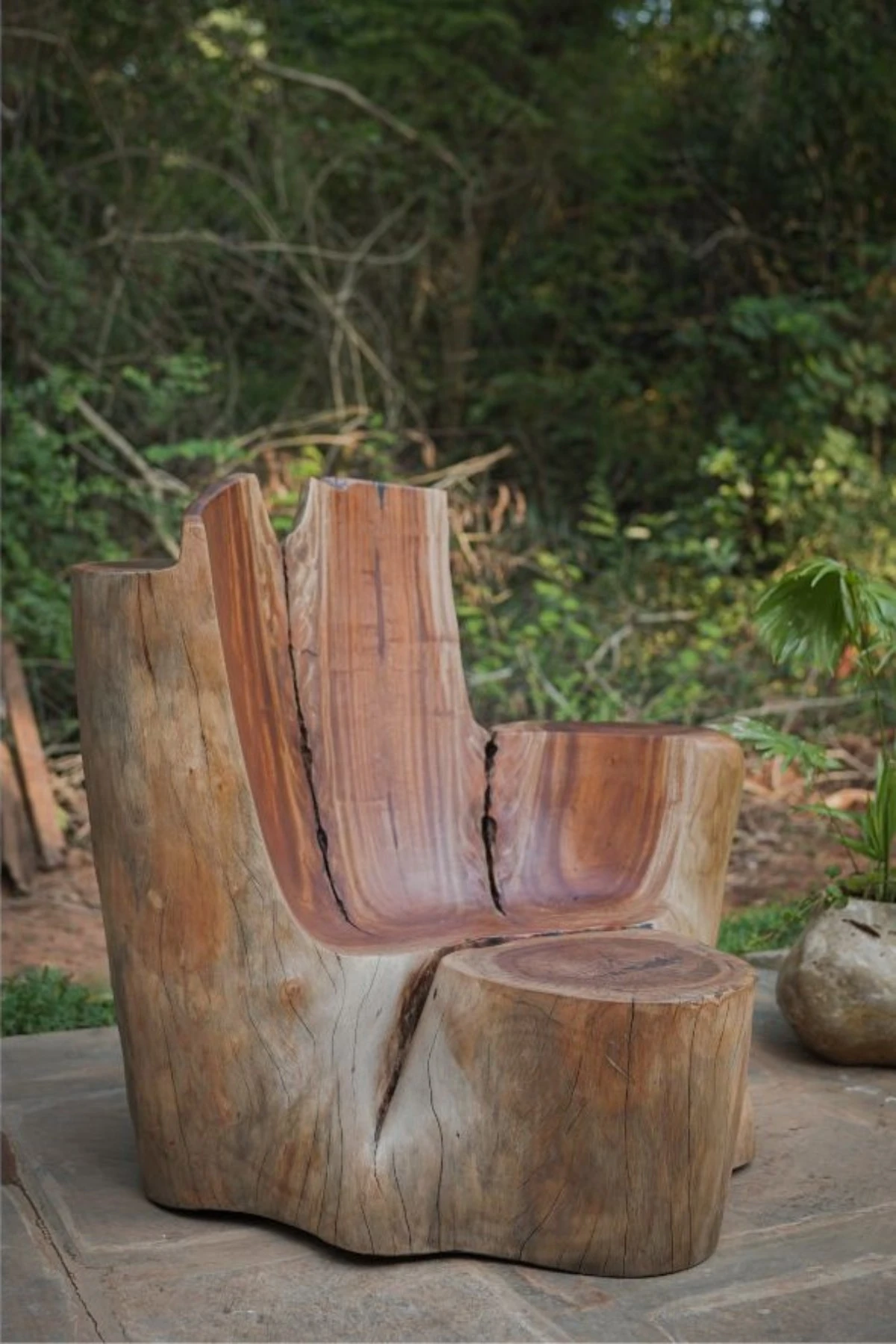
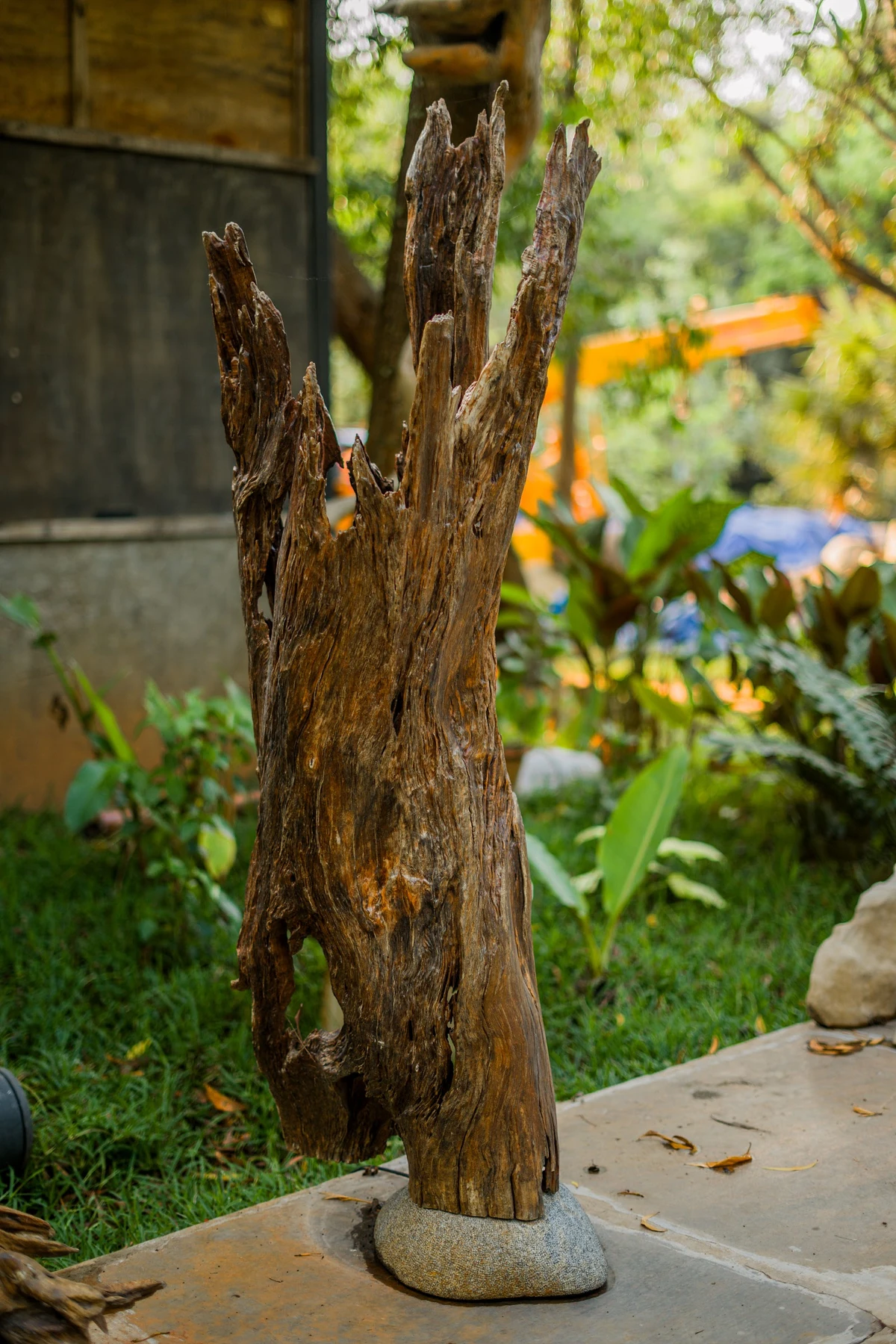
Web of Life works with solid wood as growth made visible. Grain, weathering, natural voids and the scale of an available section are read before a furniture, sculptural or functional direction is resolved.
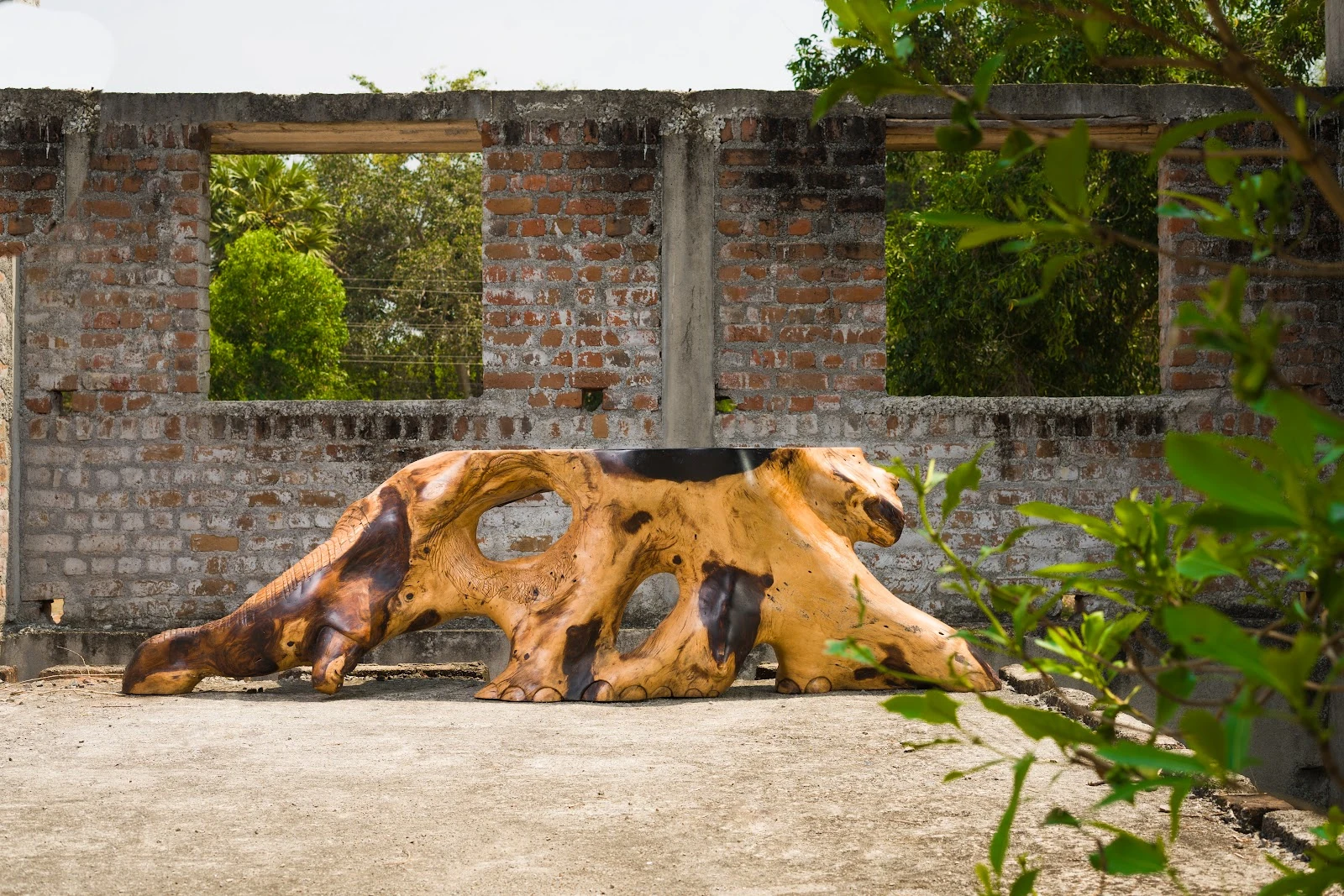 Mammoth Console Table · Eastern Walnut, Glass↗
Timber → section → character
A cut reveals direction, variation and possibility.
Every section carries a different relationship between grain, heartwood, edge and interruption. A long branching form may suggest span; a compact mass may hold a seat, object or basin; an existing void may become the centre of the composition.
These conditions are starting points, not guarantees. Section, scale, structural needs and workshop feasibility are considered for each completed work and each commission.
Grain → form
The line of growth remains part of the finished work.
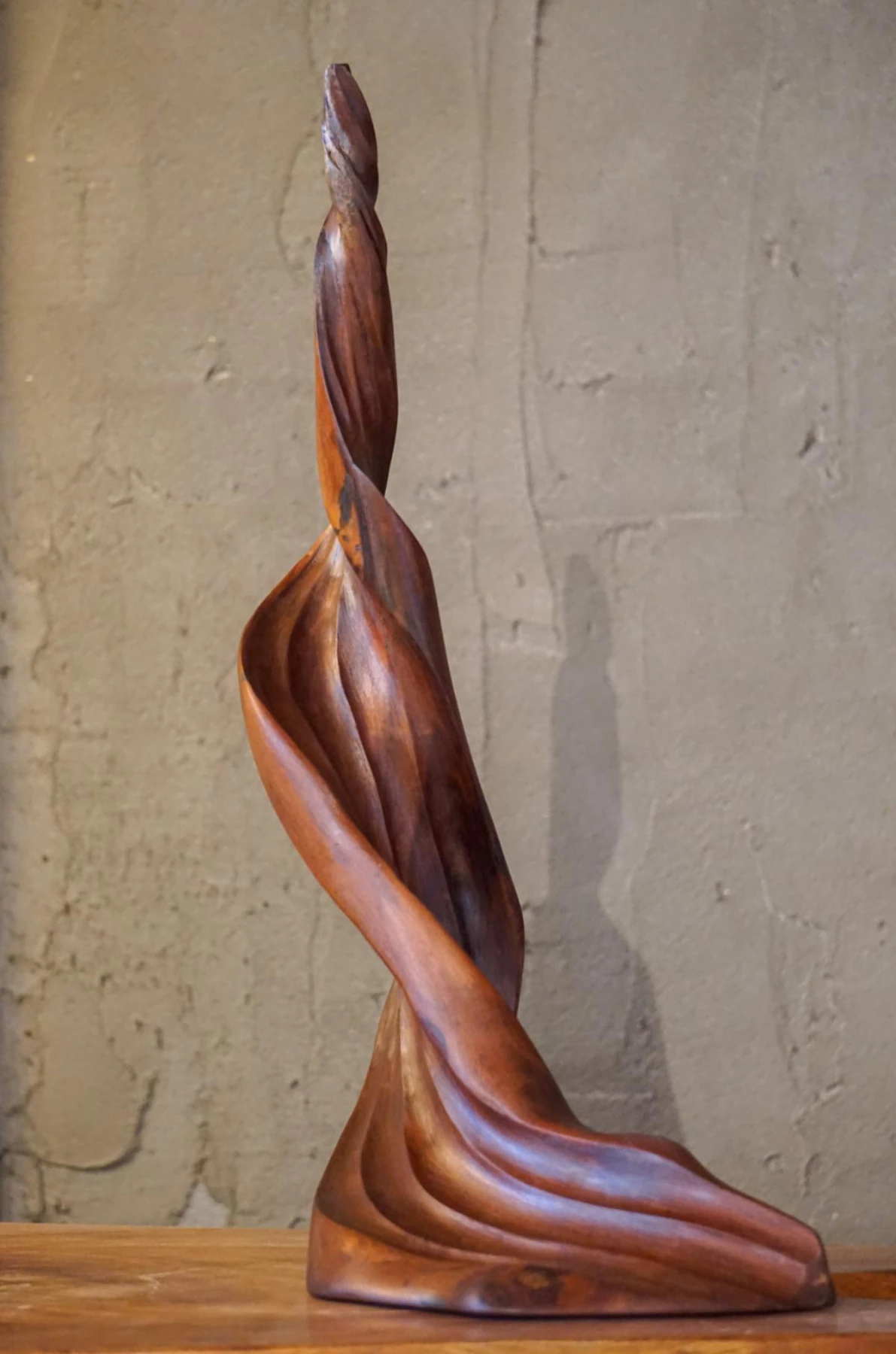
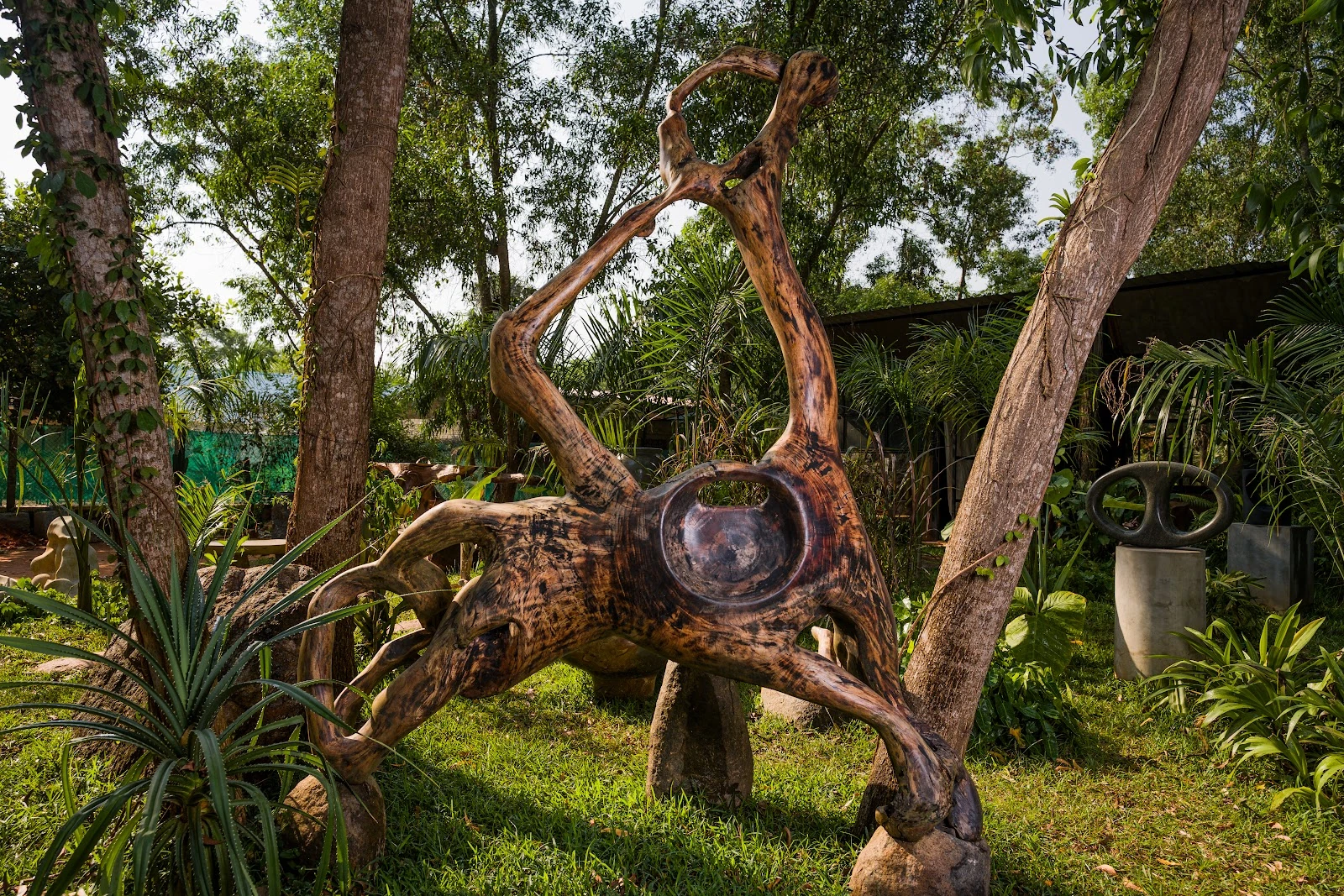
Documented wood palette
Common names are preserved exactly as the catalogue records them.
Walnut names
East Indian Walnut and Eastern Walnut appear as distinct catalogue terms.
Rosewood names
Rosewood, Rose wood, Carved Rose wood and Pacific Rosewood remain separately named.
Teak, neem & acacia
These recur across seating, sculpture, mirrors, tables and mixed-material works.
Further completed work
Mango, Mahogany, Jackfruit, Eucalyptus and Kalimaruthu are also explicitly documented.
These are catalogue common names, not botanical identifications. No Latin species, geographic origin, certification, protected status or sourcing claim is inferred from them.
Surface → contrast
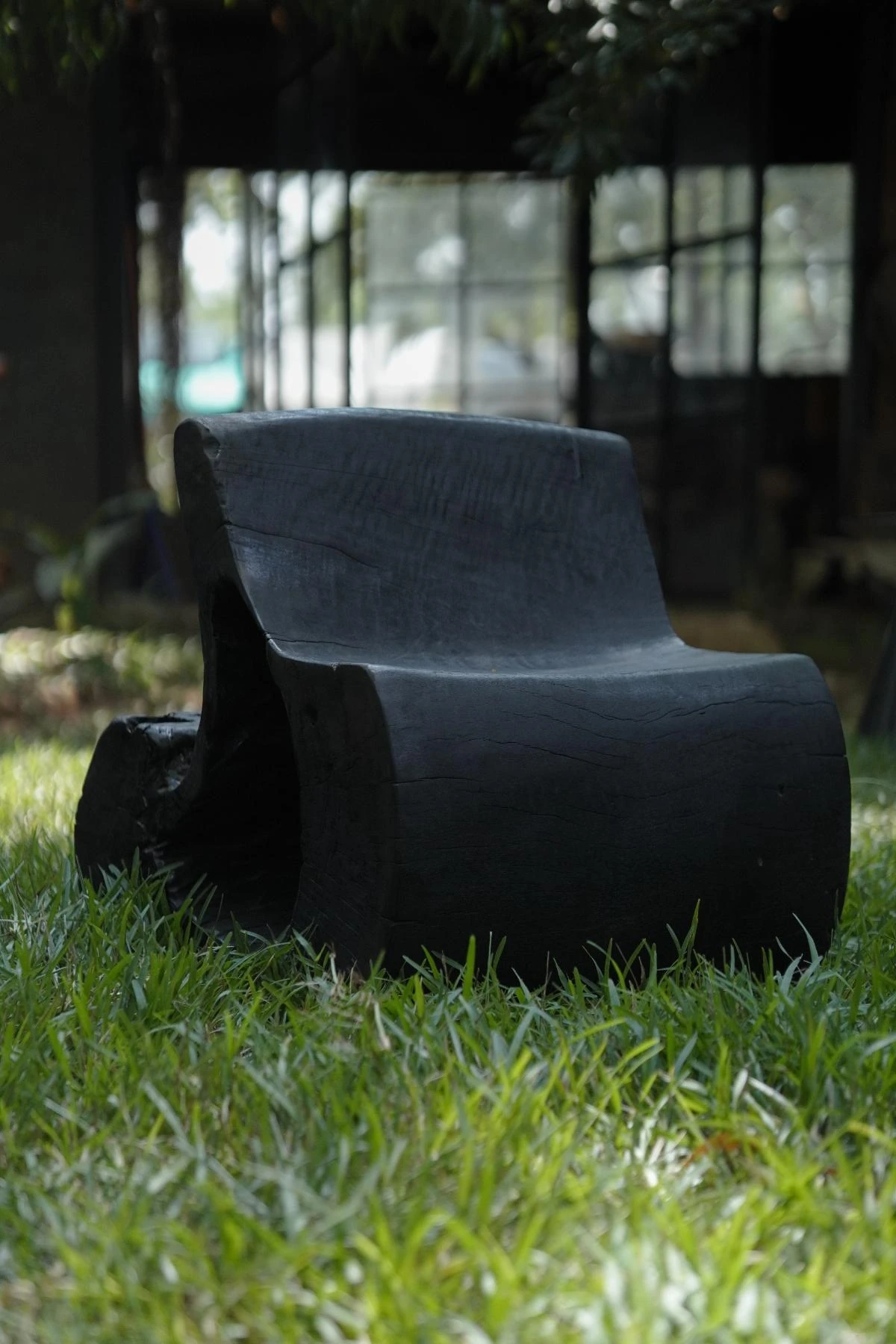
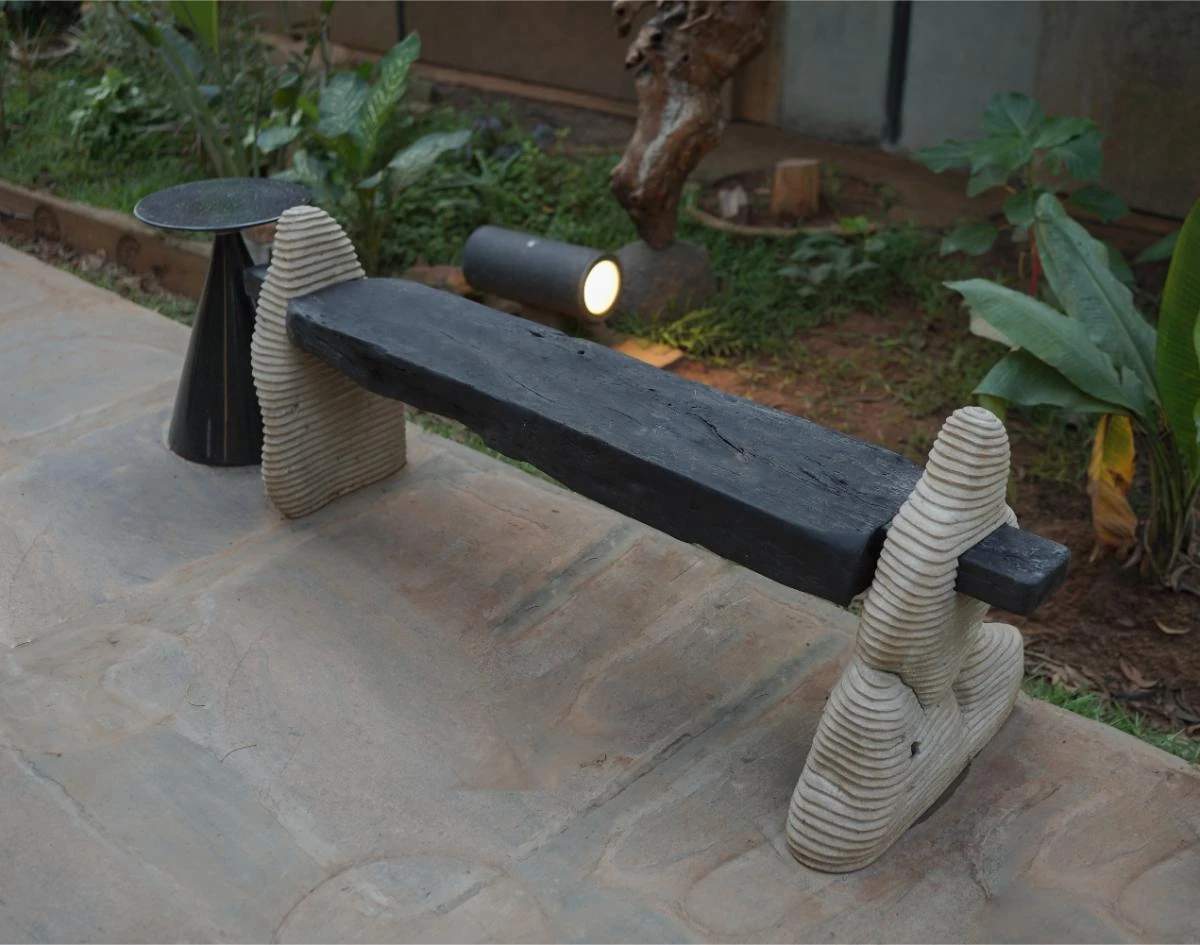
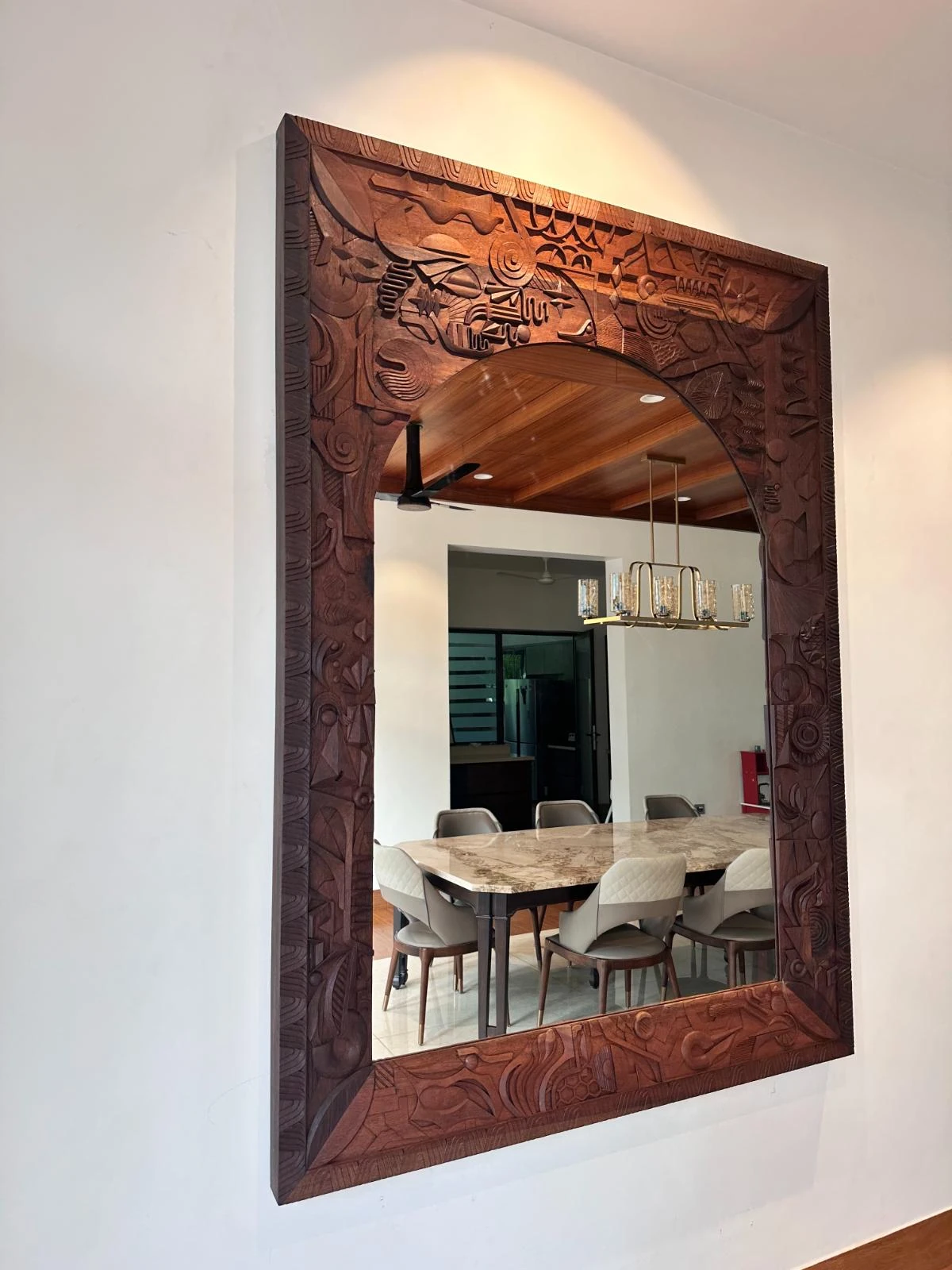
Polished grain and documented charred finishes.
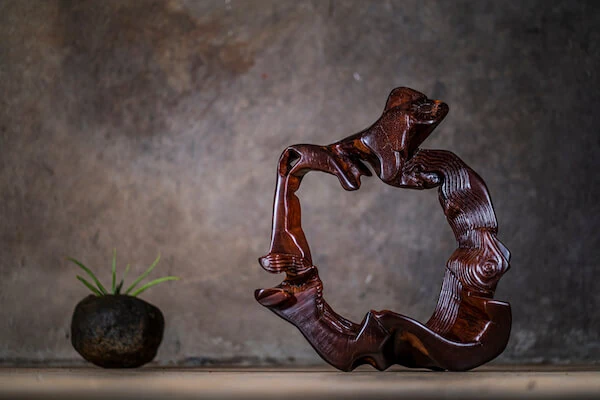
Surface can clarify flowing grain or quiet it into a dark field. The works below are the three catalogue records that explicitly name charred timber: teak, mango and Kalimaruthu wood.
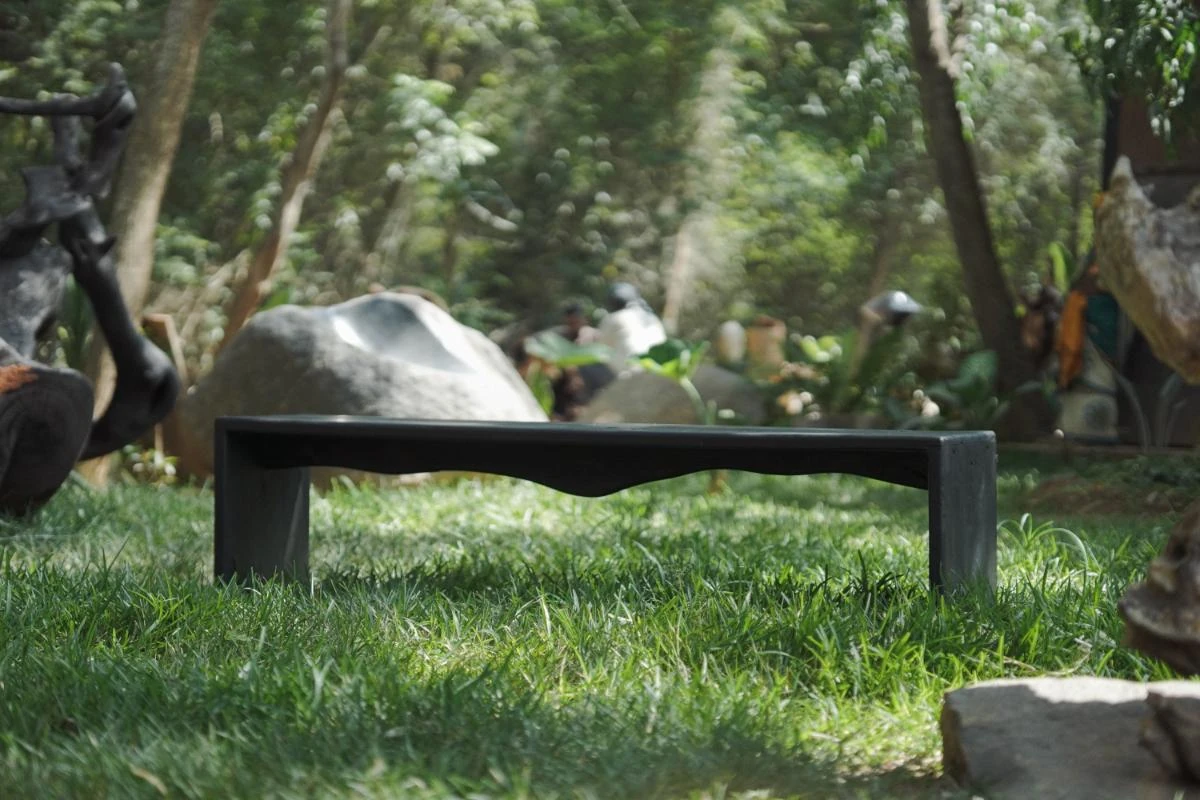
Making → surface → form
A sequence guided by the material, not a fixed recipe.
- 01
Read
Observe the section, grain direction, existing edge, voids and natural geometry.
- 02
Resolve
Find a sculptural or functional direction that the particular piece can support.
- 03
Shape
Carve, join and balance while keeping the timber's existing character legible.
- 04
Surface
Refine, polish or char where the completed-work record documents that treatment.
- 05
Place
Consider touch, scale, handling and the setting the finished work will inhabit.
The imagery on this page documents finished works. It is not presented as a photographic record of every workshop step.
Actual work
Sixteen completed works across scale, function and surface.
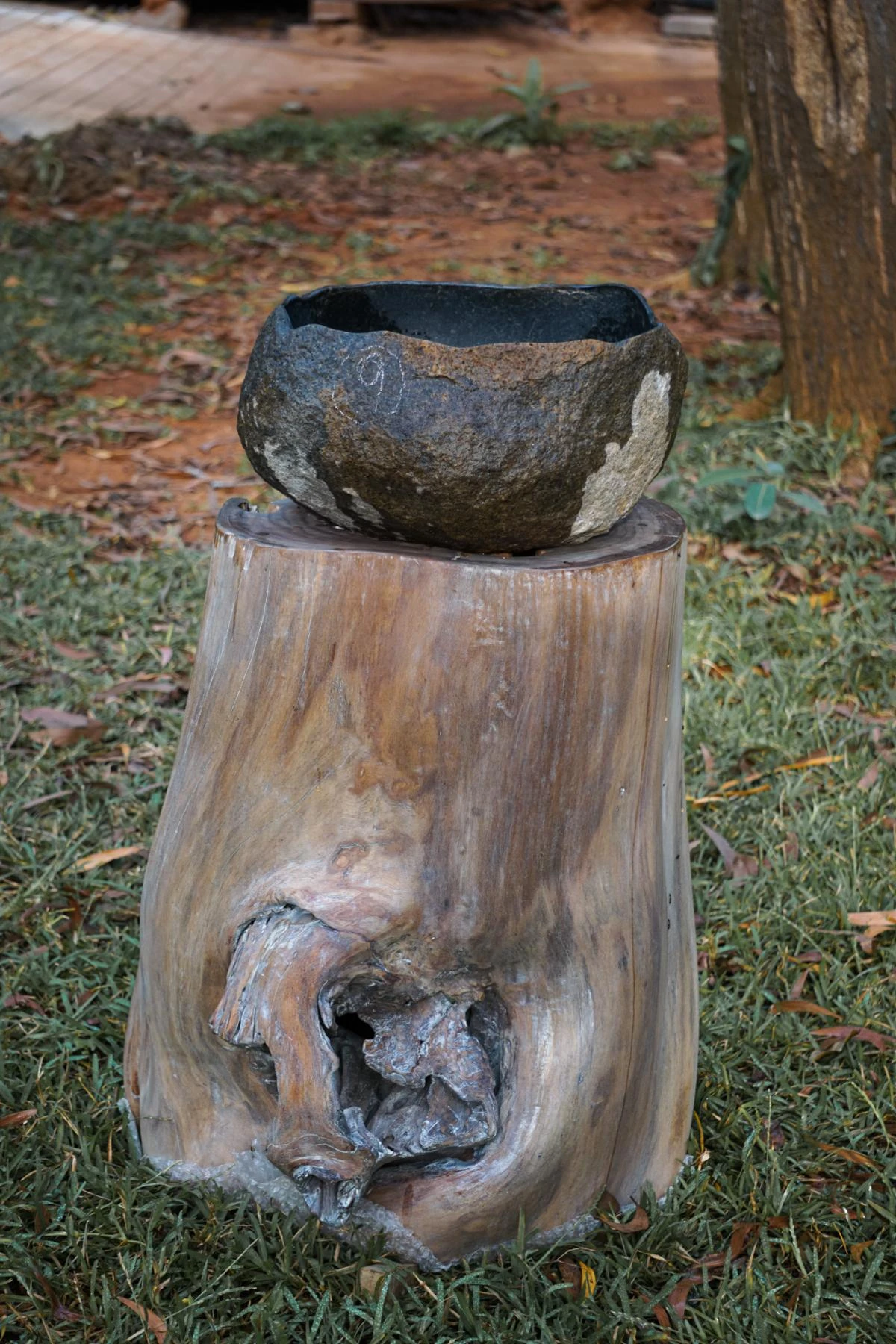
Every material label below comes from the work’s catalogue record. The selection is evidence of completed practice, not a list of current stock or a promise of repeatable dimensions.
Section & natural geometry
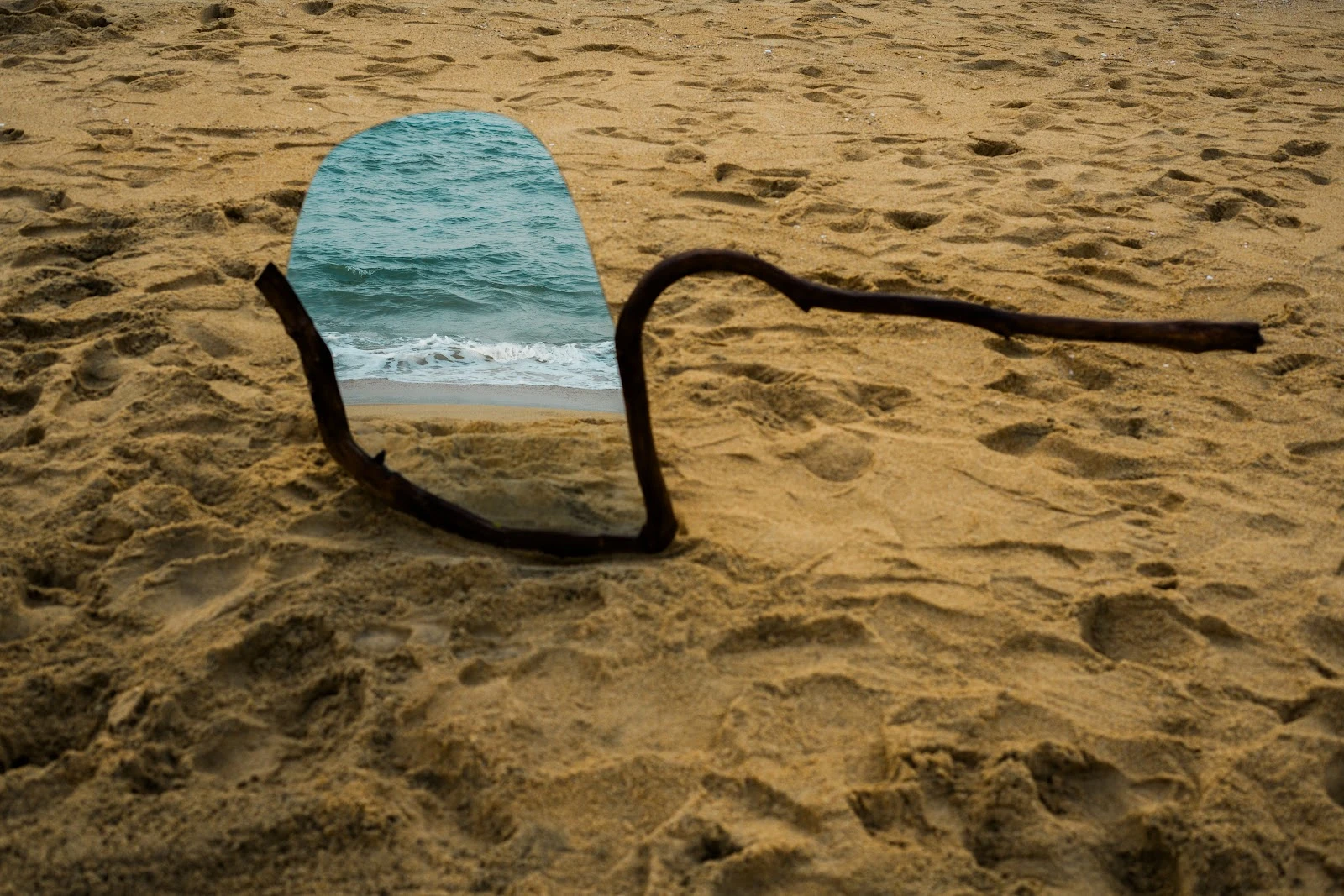
Grain & carved form


Furniture & use
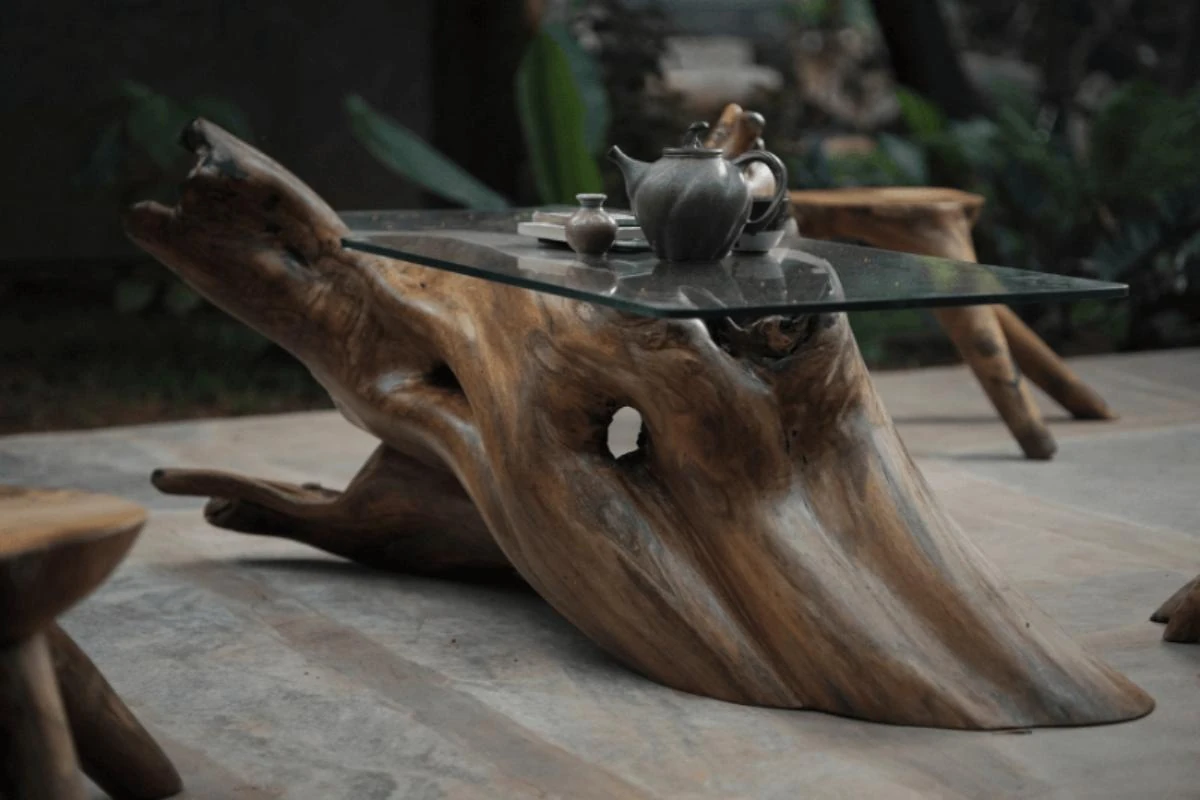
Mixed material & light
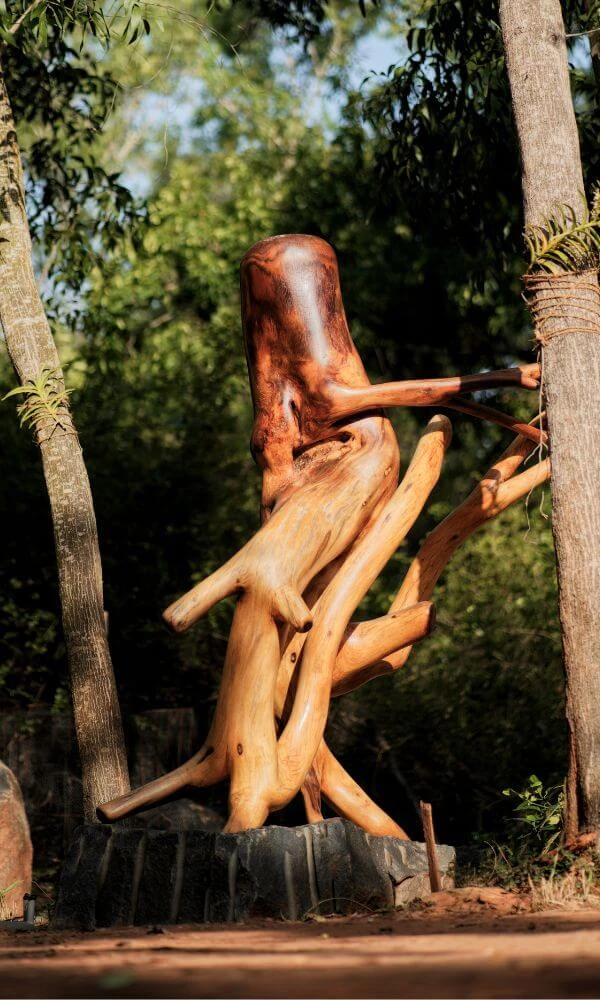
Material exploration
A broader hardwood territory, considered piece by piece.
Completed works establish the material vocabulary above. A future commission may explore other suitable tropical and regional hardwoods available within India when the material, scale, site and workshop process support the direction.
This is a field of possibilities, not an inventory, sourcing, certification, origin or dimension guarantee. The palette changes with responsible availability and the needs of the work.
Material → commission
Begin with the place, use and character the work should hold.
Web of Life develops one-of-a-kind sculpture, furniture, objects, lighting and mixed-material works through a conversation about site, scale, function and material possibility.