
A material foundation
The work begins before the drawing.
Stone arrives with mass, grain and geological time. Timber arrives with growth, weather and a direction of its own. Web of Life begins by reading those conditions, then develops form and function around what the material can hold.
Material as design process
Listen first. Remove only what the form requires.
The catalogue shows a practice built through carving, joining, polishing, charring and balancing. Natural contours and voids are treated as starting conditions rather than defects to conceal. Material selection remains specific to the piece, its scale and the place it will inhabit.
01 · Stone territory
Weight, grain and the marks of time.
Confirmed in completed work
Black, Kerala green and ivory granite; granite boulders; coquina rock and coquina limestone; limestone including Golden Ash; glauconite rock; and petrified wood.
What the catalogue demonstrates
Vessels, basins, tables, seating, mirrors and sculpture shaped around each stone’s density, inclusions, natural edge and finish.
Commission territory
These completed works establish a material vocabulary, not a promise that every stone suits every brief. Availability, scale, site and workshop feasibility are considered for each commission.
Completed-work labels above are catalogue-backed. Marble, sandstone and an undifferentiated “fossil stone” are not presented as completed-work materials because the current catalogue does not identify them with the same confidence. For future commissions, the material conversation may extend to additional granites, marbles, limestones, sandstones, fossil-bearing stones and other suitable Indian natural stone, subject to project fit and availability.
02 · Tropical hardwoods
A changing palette, led by the piece of timber itself.
Core documented woods
East Indian and Eastern walnut as catalogued, rosewood and Pacific rosewood, teak, neem and acacia.
Other named woods
Individual works also record mango, mahogany, jackfruit, eucalyptus and Kalimaruthu. The catalogue includes charred teak, mango and Kalimaruthu treatments where explicitly documented.
Selection over specification
Species is only one part of the decision. Grain, section, weathering, natural voids, structural needs and responsible availability determine what a piece can become.
03 · Supporting materials
Clarity, reflection and structure.
Glass and mirror recur as precise counterparts to carved stone and timber—supporting a surface, holding a reflection or leaving the primary material visually uninterrupted. Metal appears in selected works, but it is not presented as a principal material territory.
Representative works
Twelve works, twelve material decisions.
Each label below comes directly from the work’s catalogue record. Follow a piece to see its complete object page.
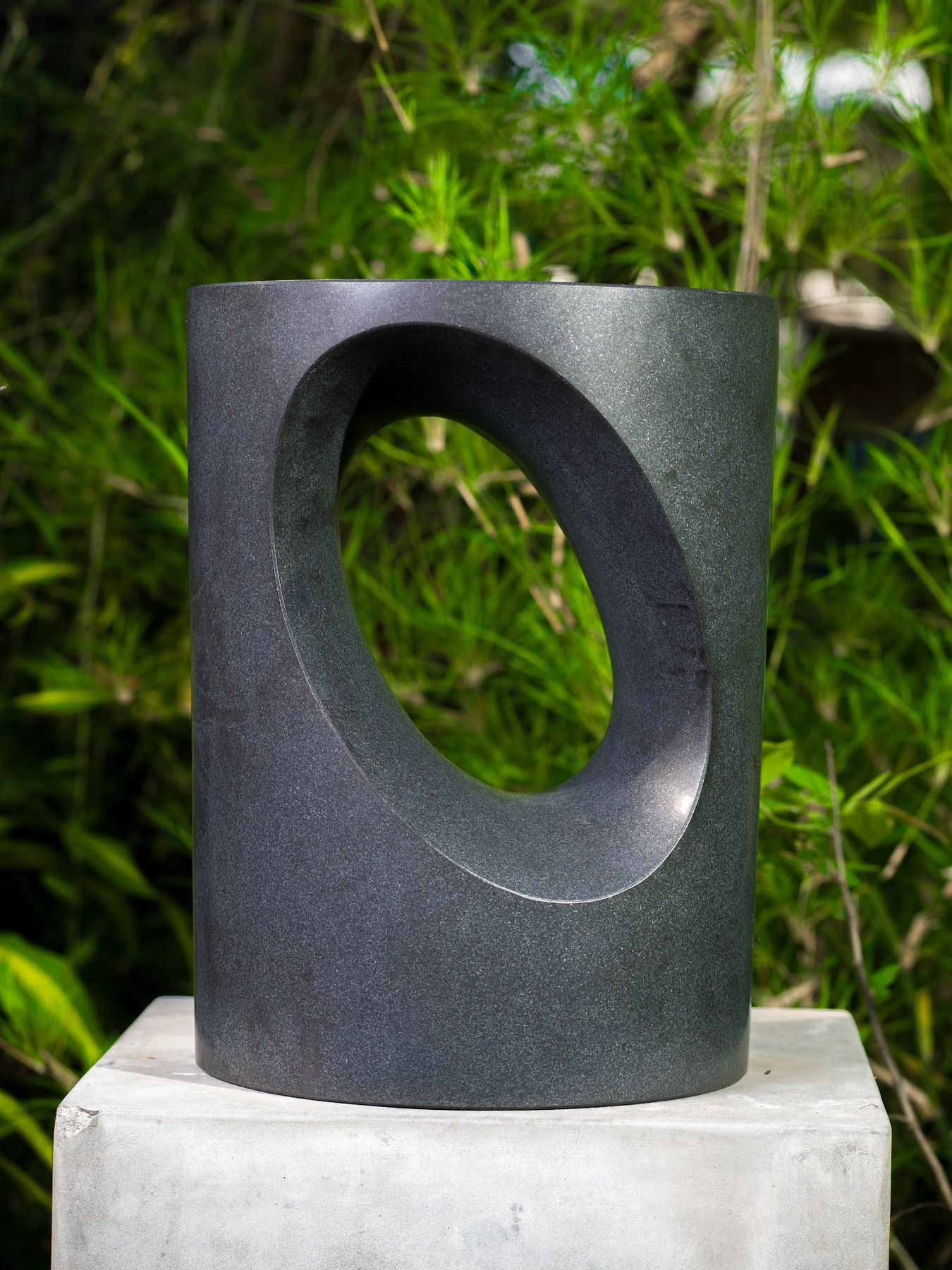
Voided Side Table
Black Granite
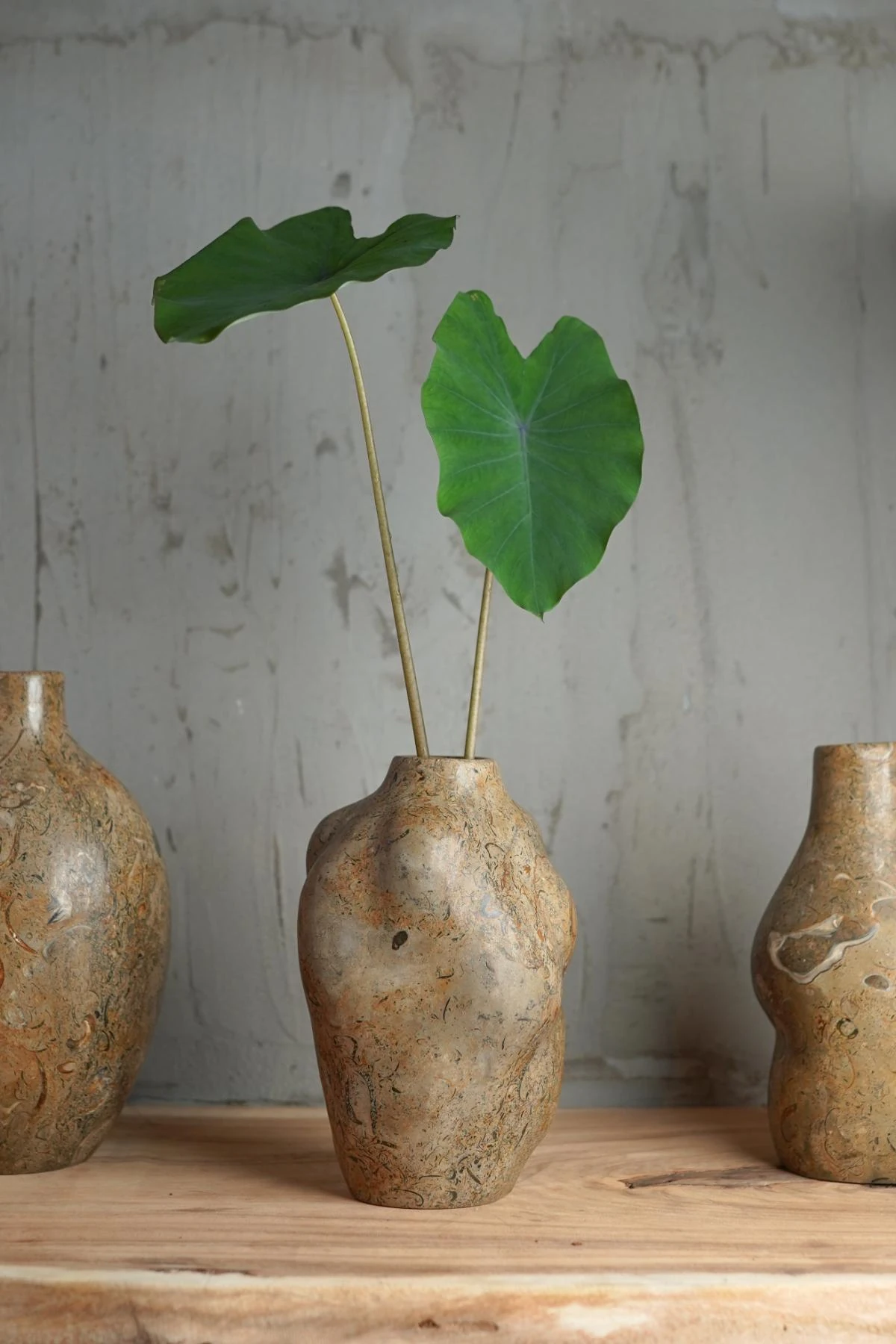
Biomorphic Vase Series
Coquina Rock
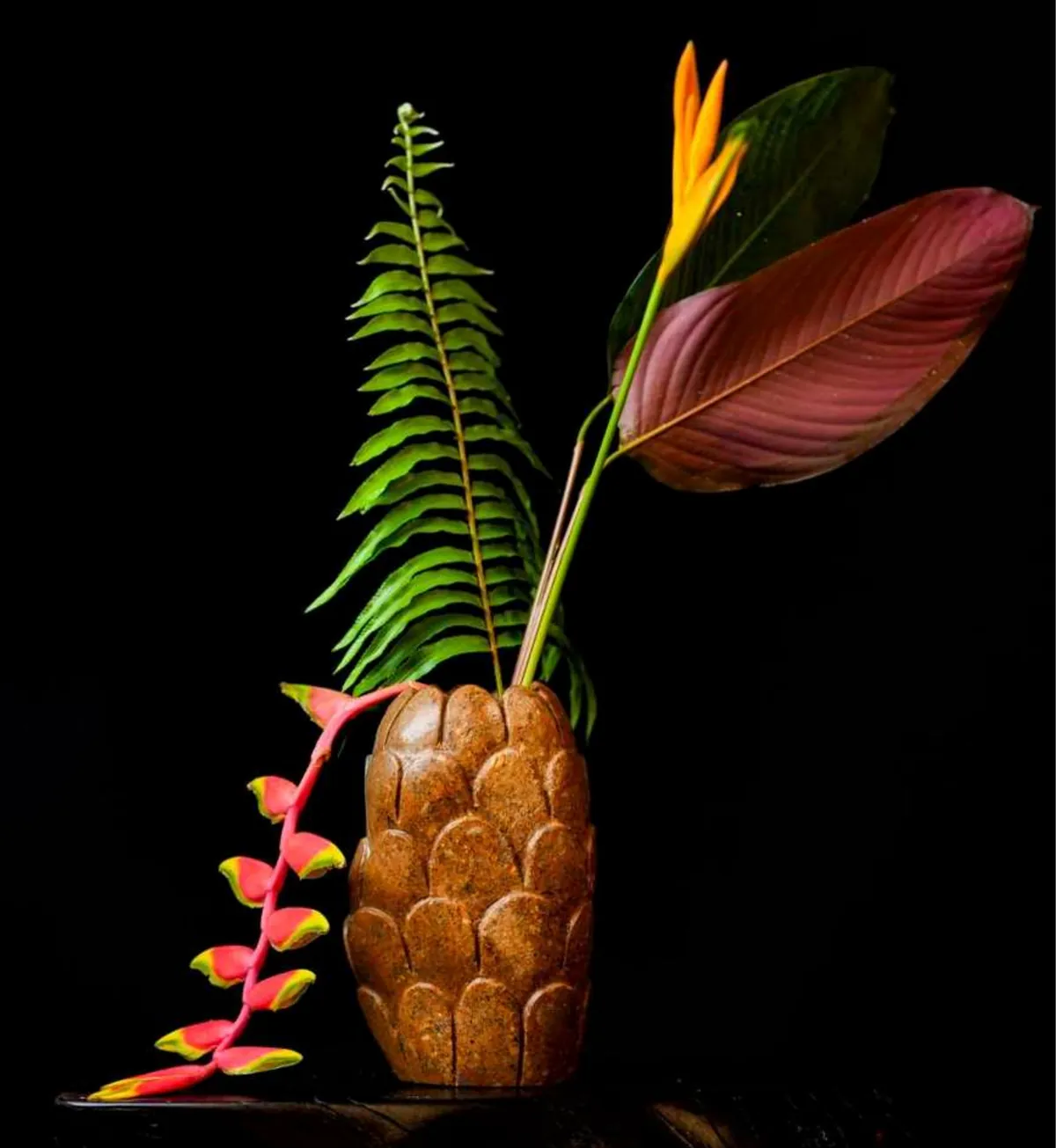
Vessel of Nature No. 01
Glauconite Rock
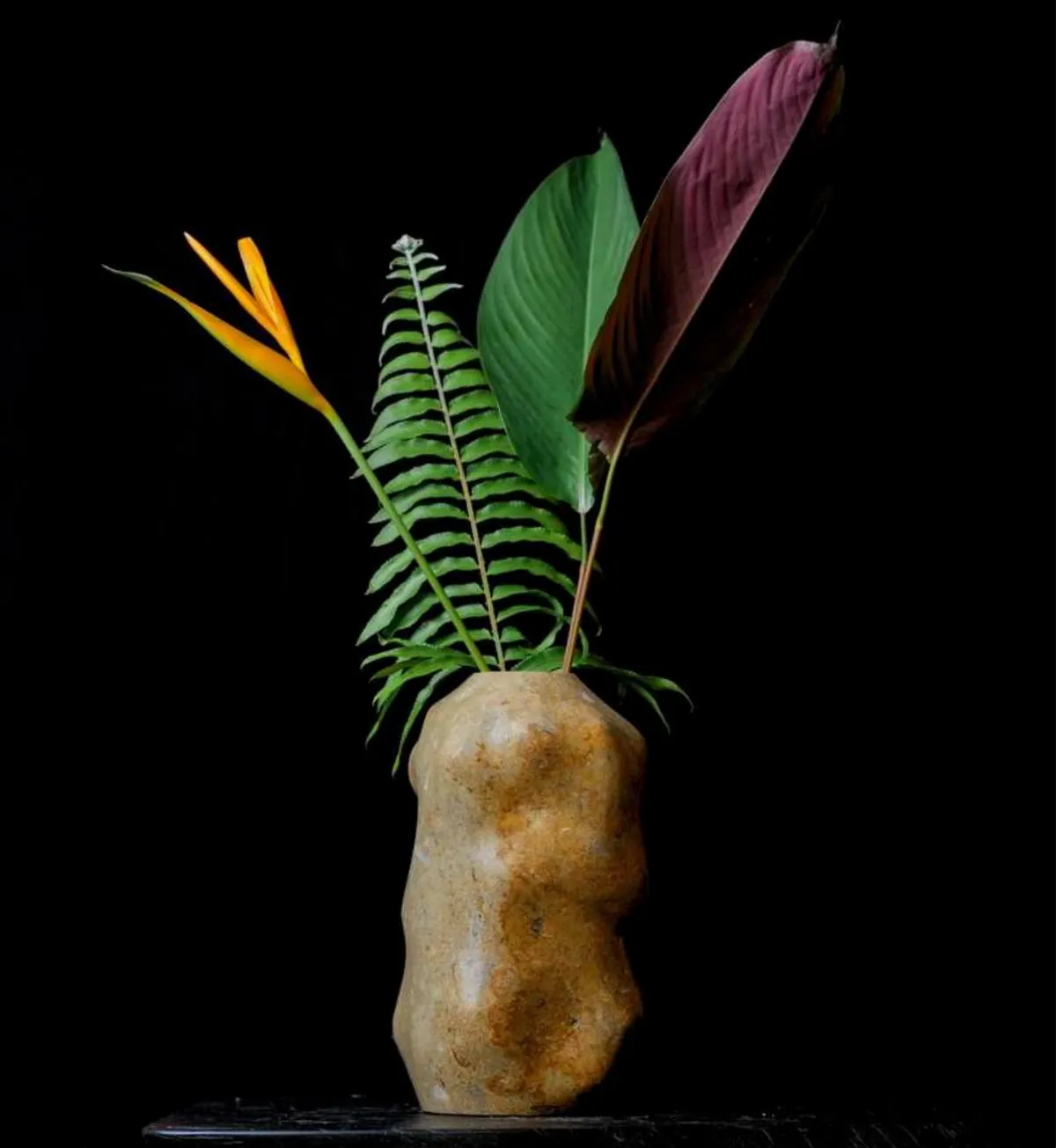
Vessel of Nature No. 32
Limestone
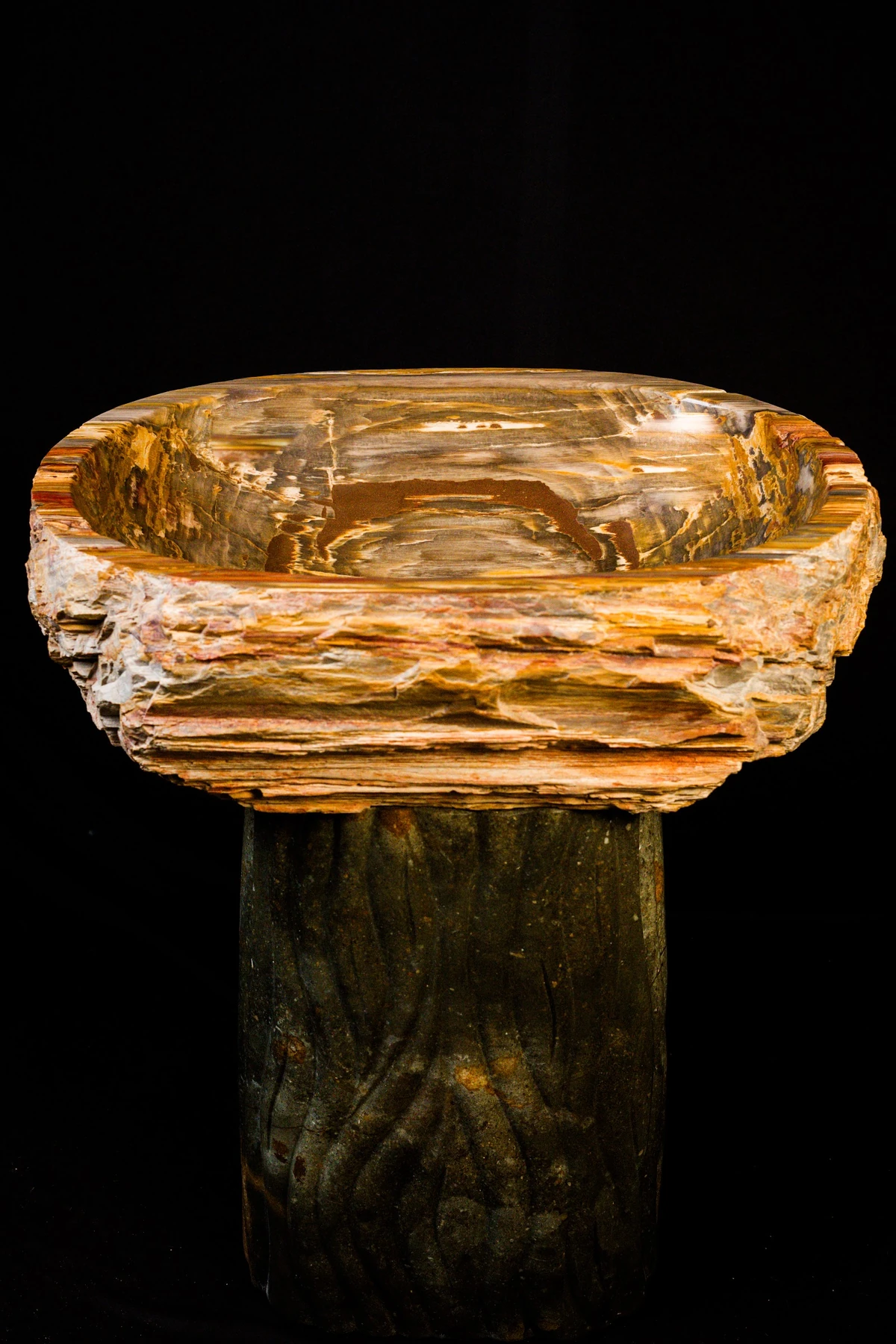
Petrified Wood Basins
Petrified wood
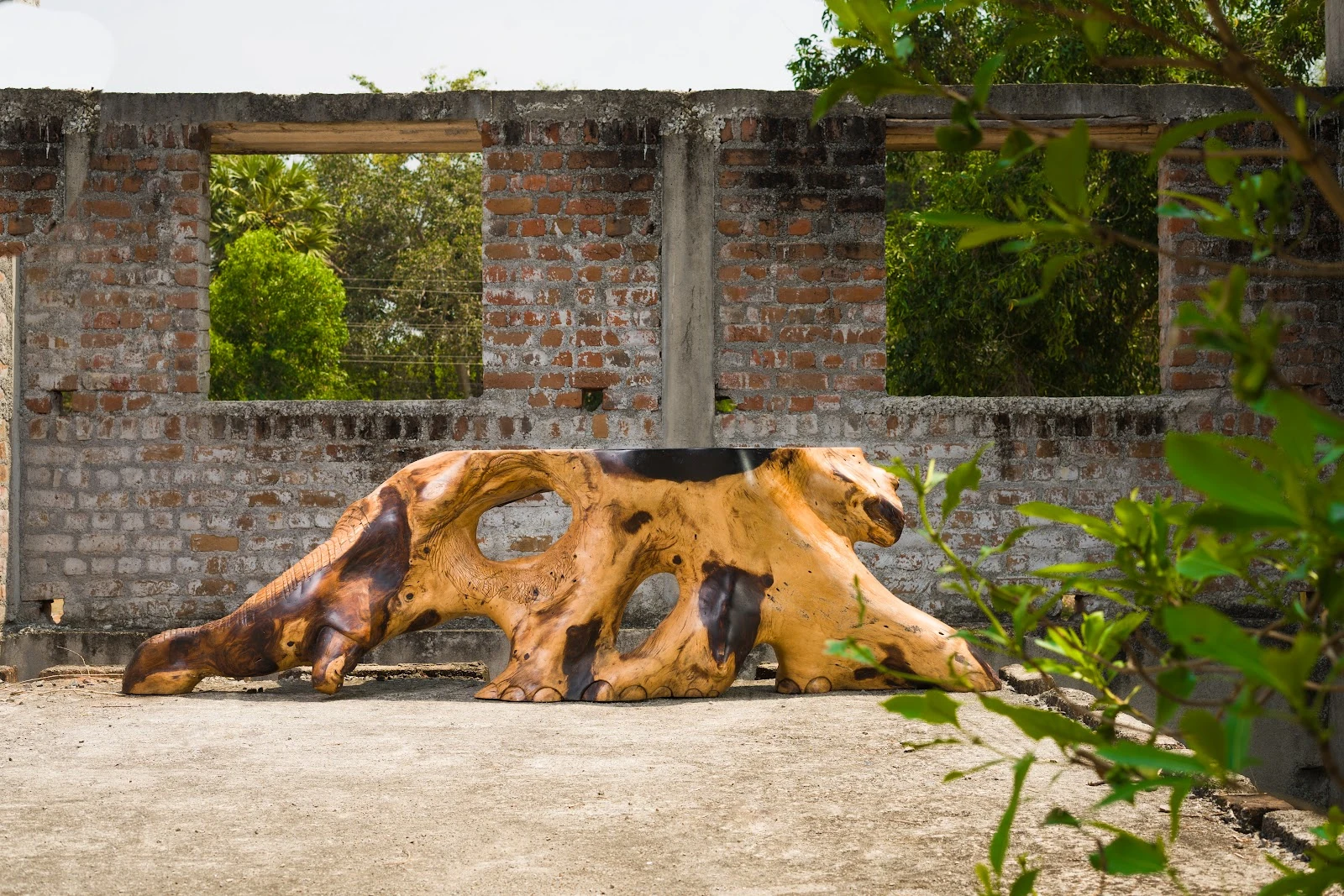
Mammoth Console Table
Eastern Walnut, Glass
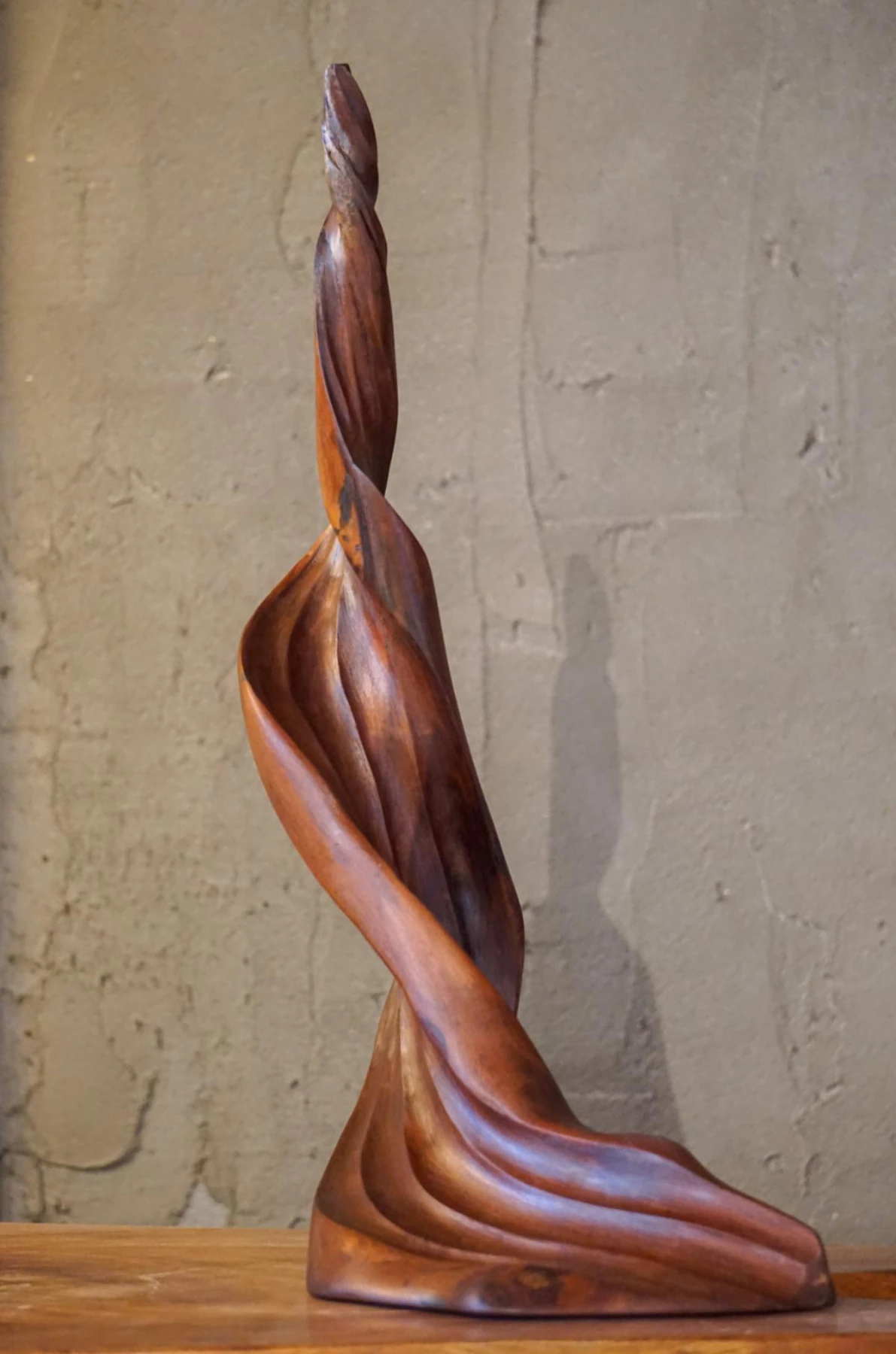
Crafted Curves
Pacific Rosewood
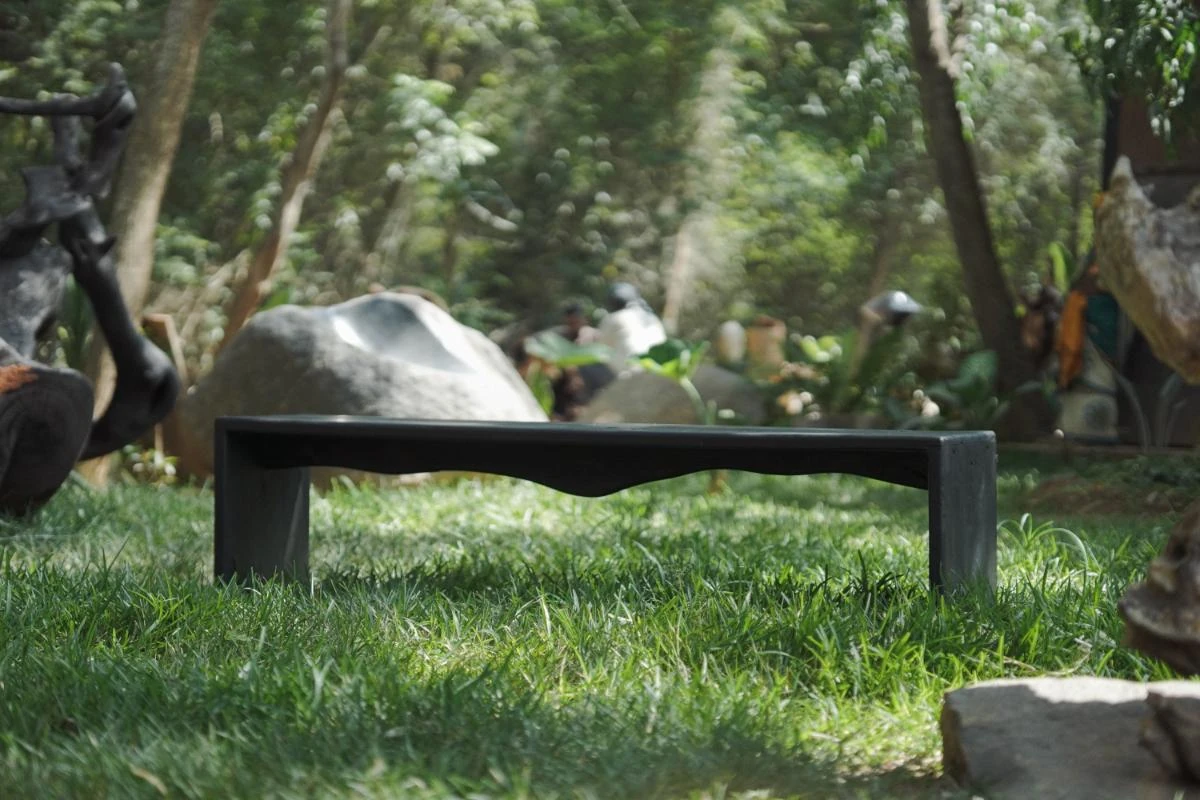
Black Bench
Charred Teak wood
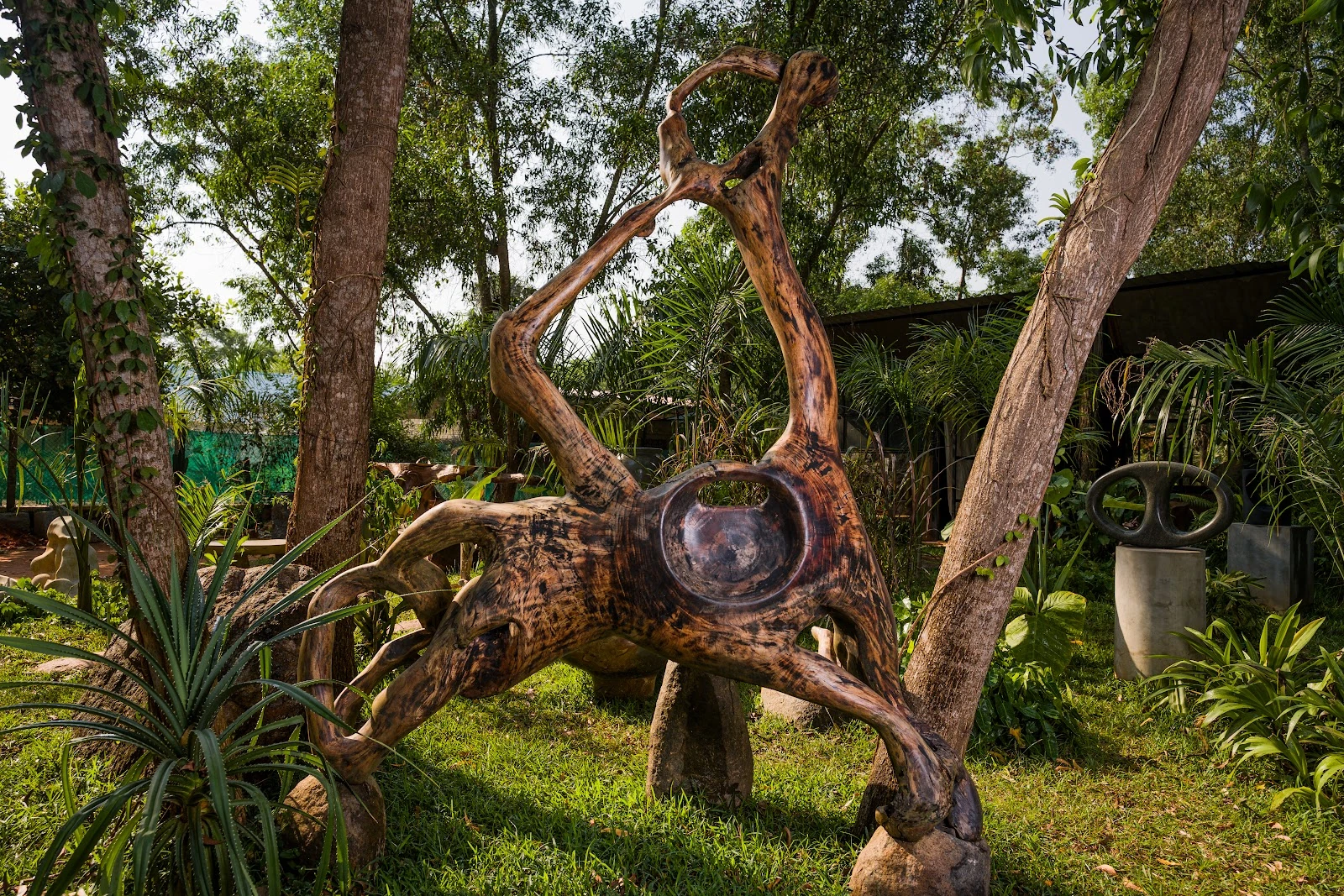
Sculptural Neem Void
Neem wood
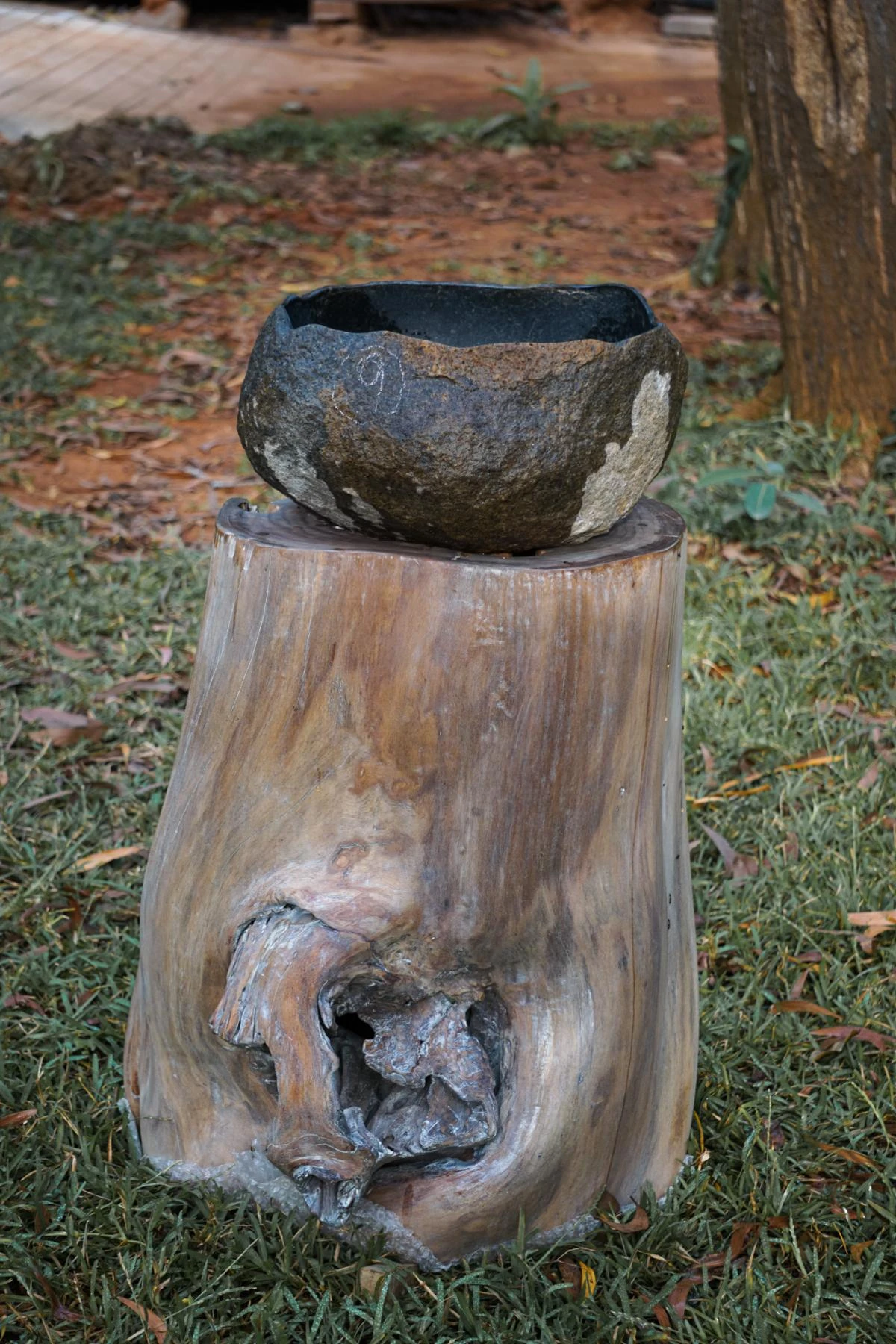
Log Rock Basin
Acacia wood, Black granite
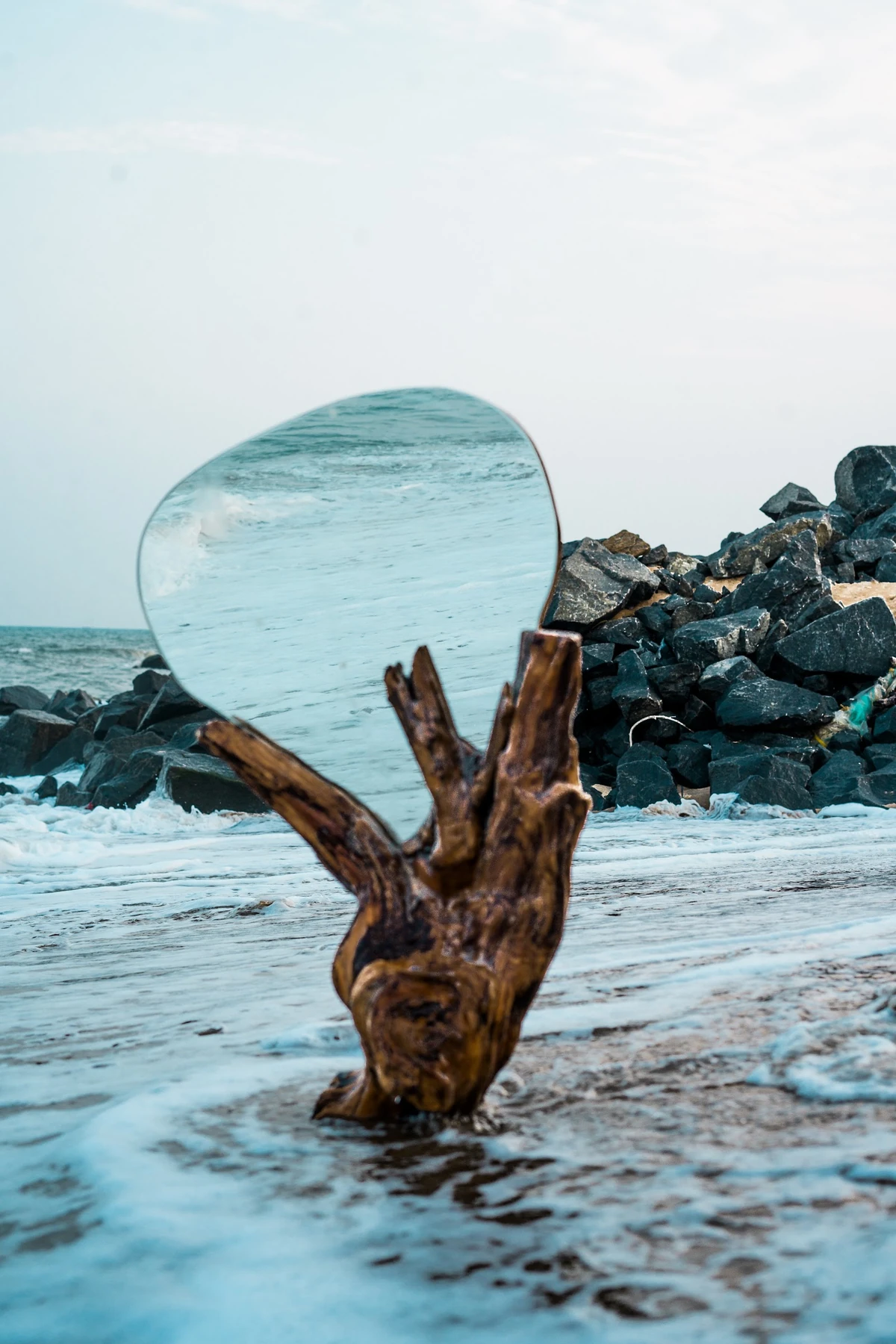
Branched Out Mirror
Teakwood
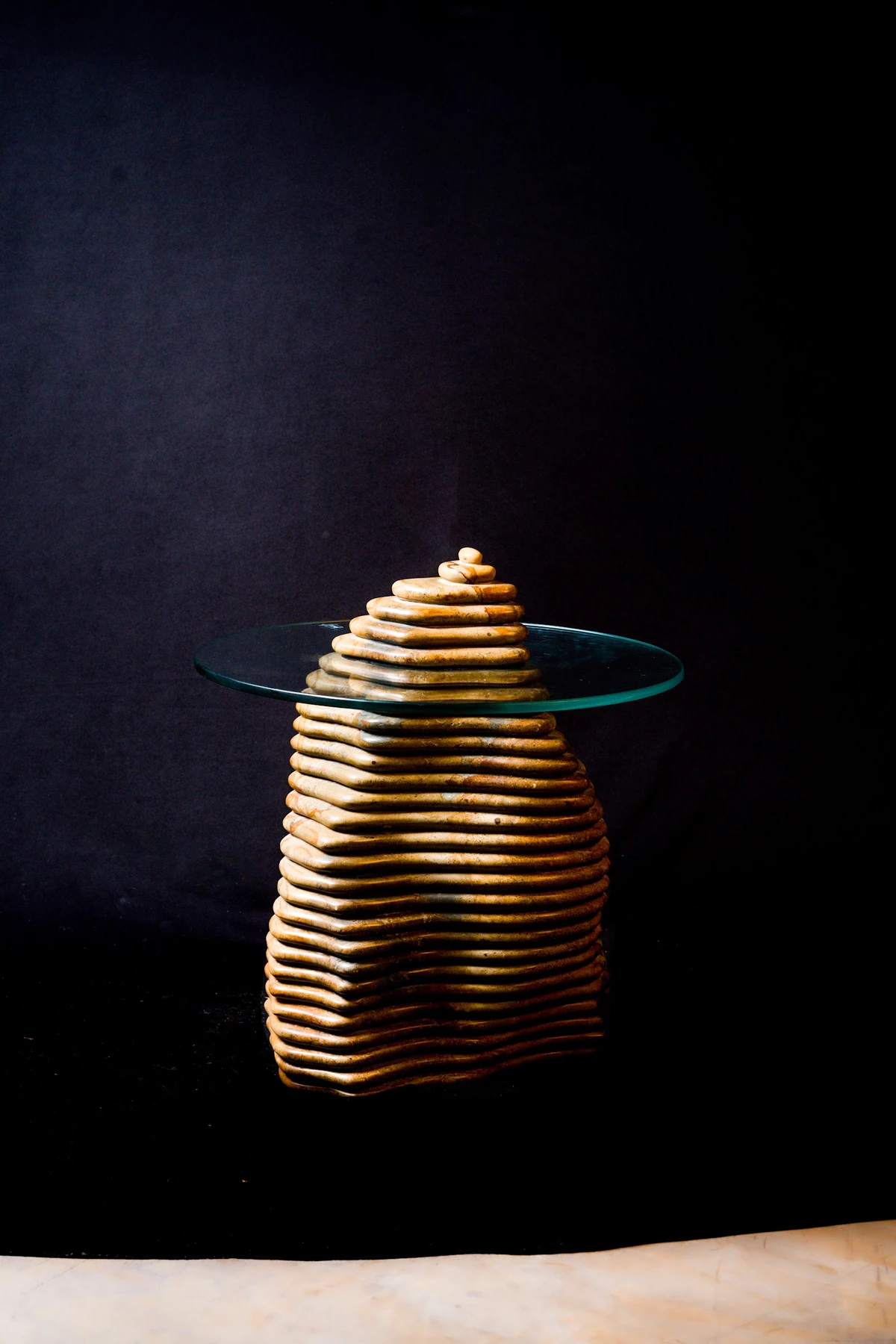
Sediment Table
Coquina stone, Glass
Material journey · workshop
From encounter to finish.
- 01
Read the grain, edge, void, mass and structural condition.
- 02
Find the sculptural and functional direction the material can support.
- 03
Carve, join, balance, polish or char without erasing its character.
- 04
Plan the finished work for handling, installation and its destination.


Material-led commissions
Begin with a place, a need or a material question.
Existing works can open a conversation around mass, texture, function or scale. A commissioned piece is then developed for its own context rather than reproduced from a catalogue work.