
Material authority · natural stone
Stone holds time. Form gives it a new rhythm.
Web of Life works with stone as mass, surface and evidence. The grain, inclusions, weathered edge and density of a particular piece are read before a functional or sculptural direction is resolved.
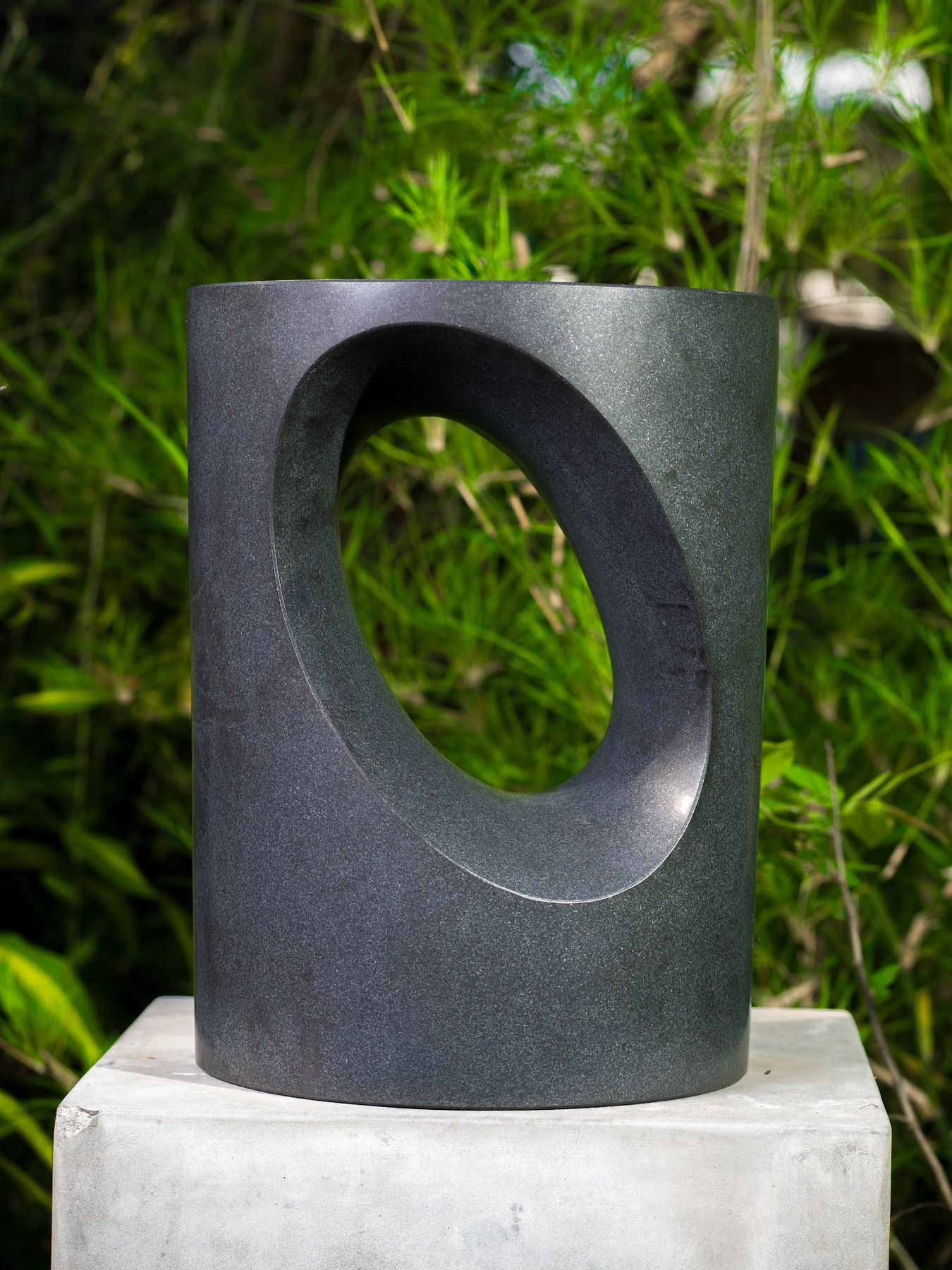 Voided Side Table · Black Granite↗
Material → character
Not a neutral block, but a set of conditions.
Natural stone can arrive compact or porous, even-toned or visibly layered, smoothable or deliberately rough. Those differences affect scale, balance, edge, touch and the amount of material a form can release.
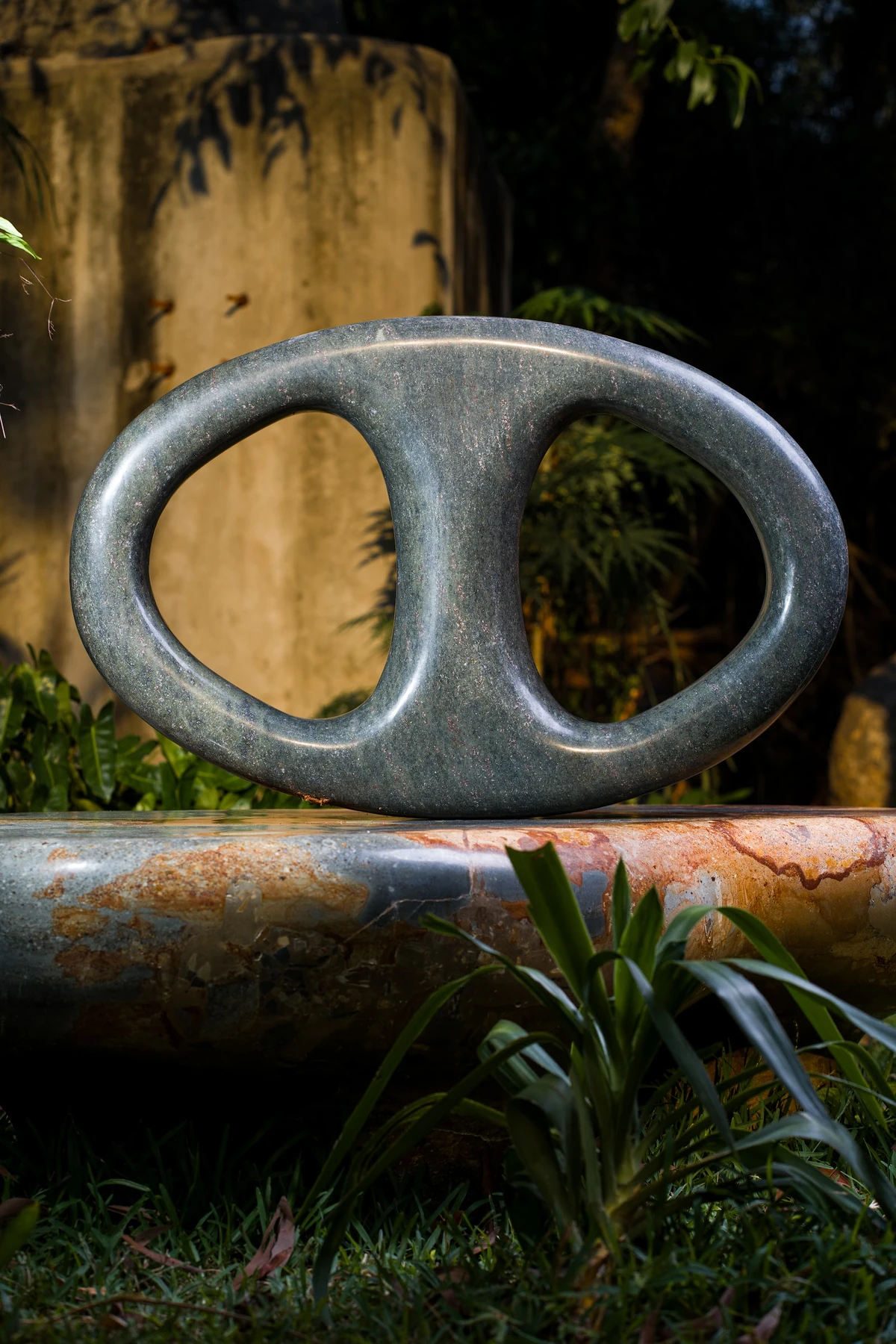
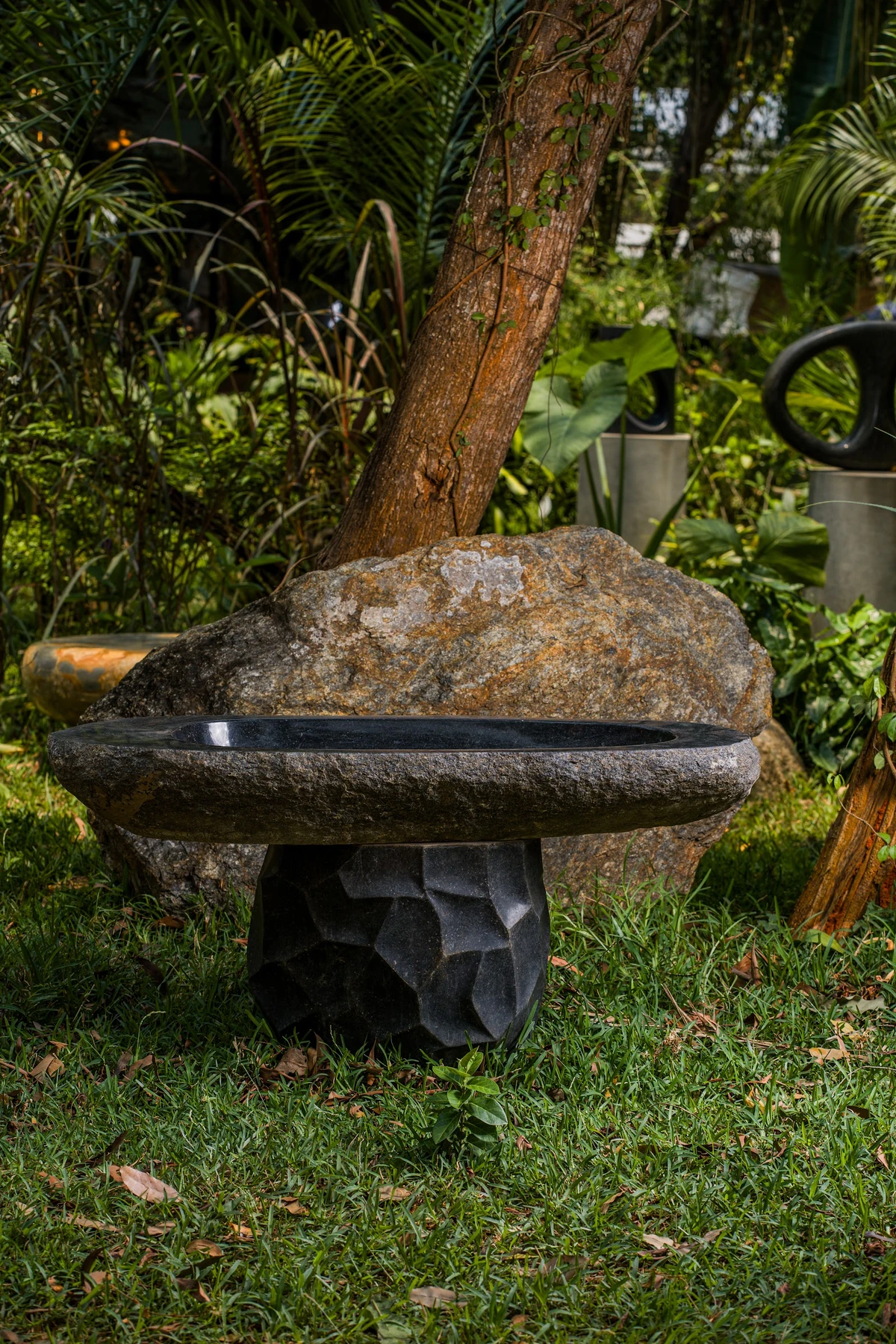
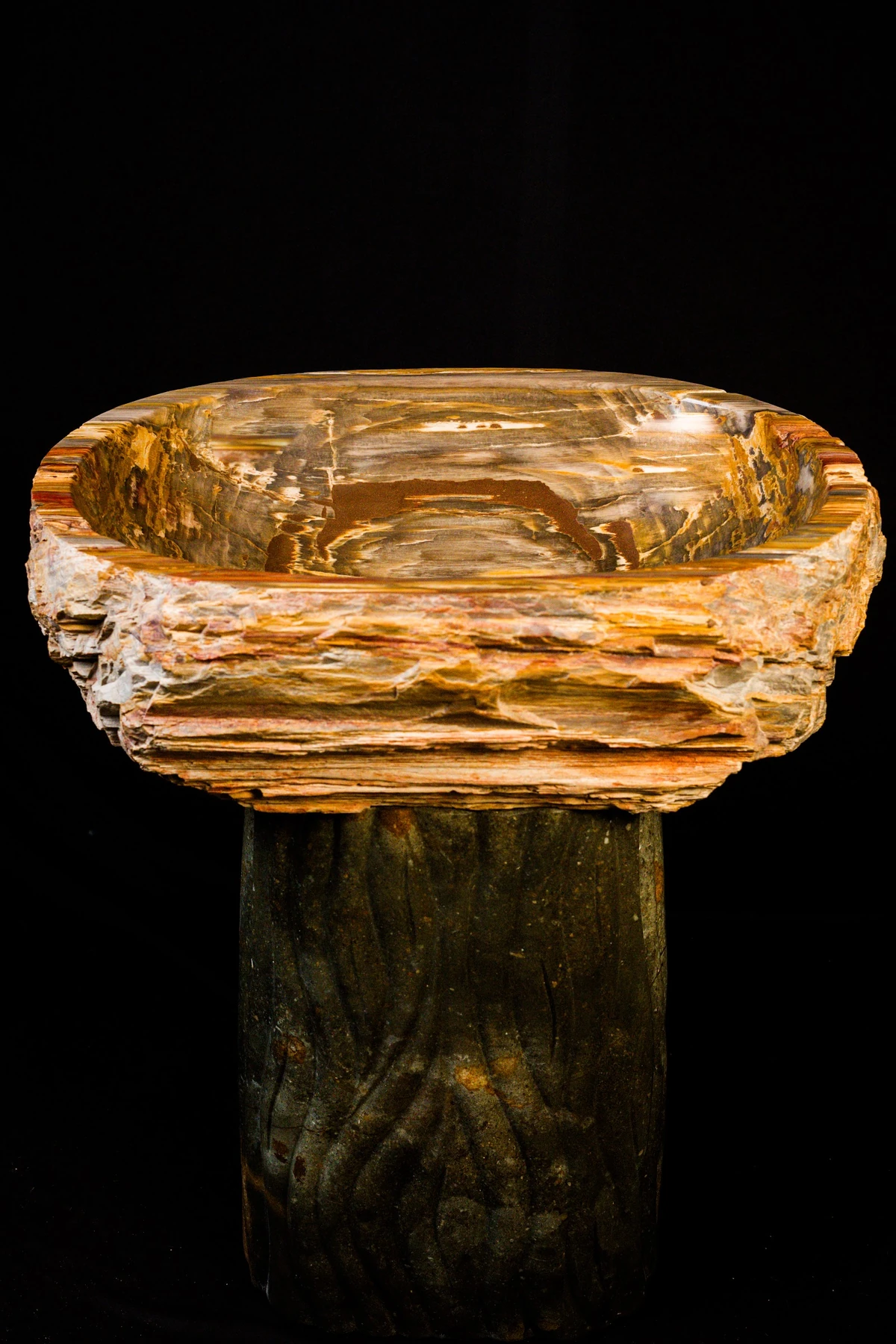
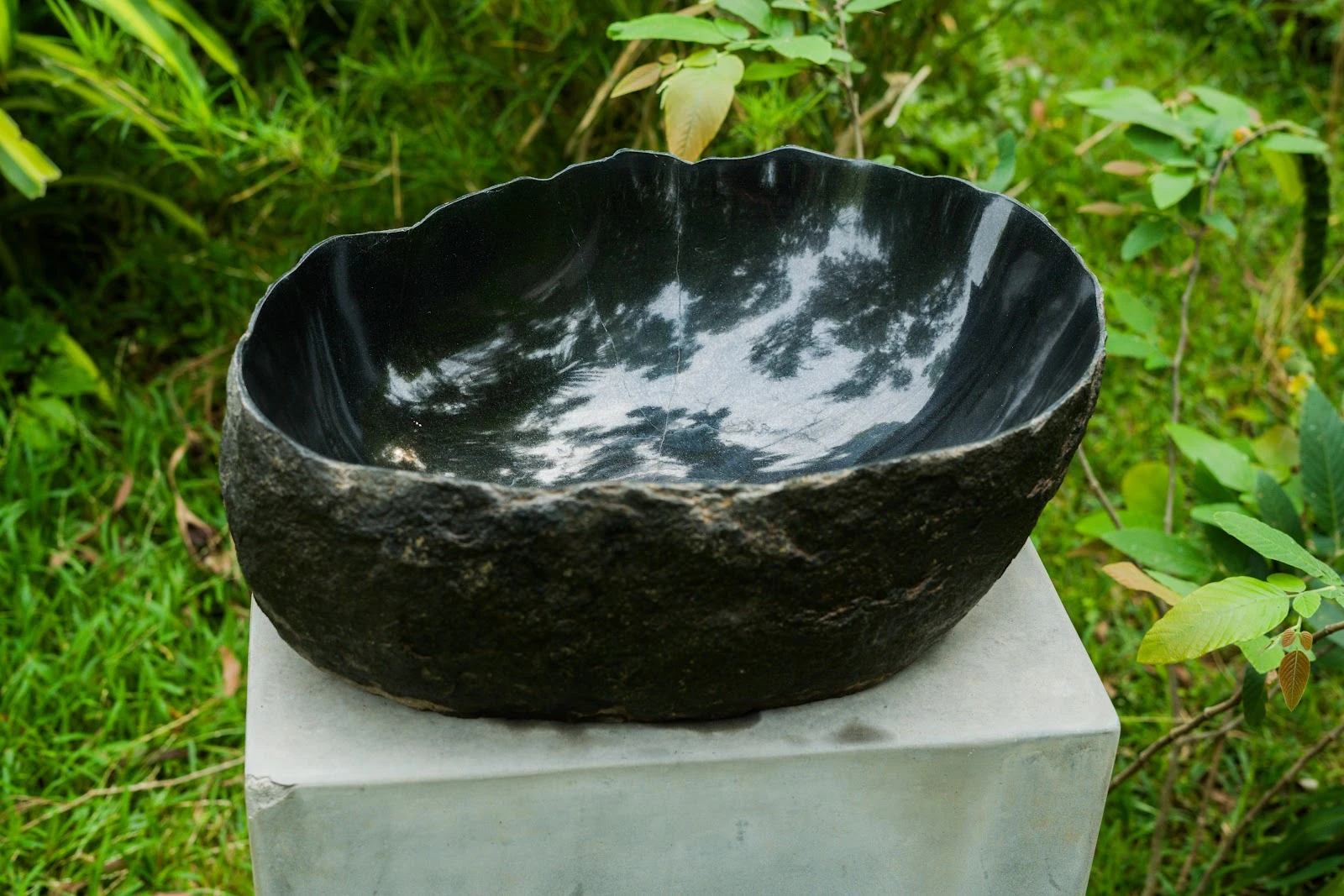
The completed catalogue documents black, Kerala green and ivory granite; granite boulders; coquina rock and coquina limestone; limestone including Golden Ash; glauconite rock; and petrified wood. The terminology here follows those work records.
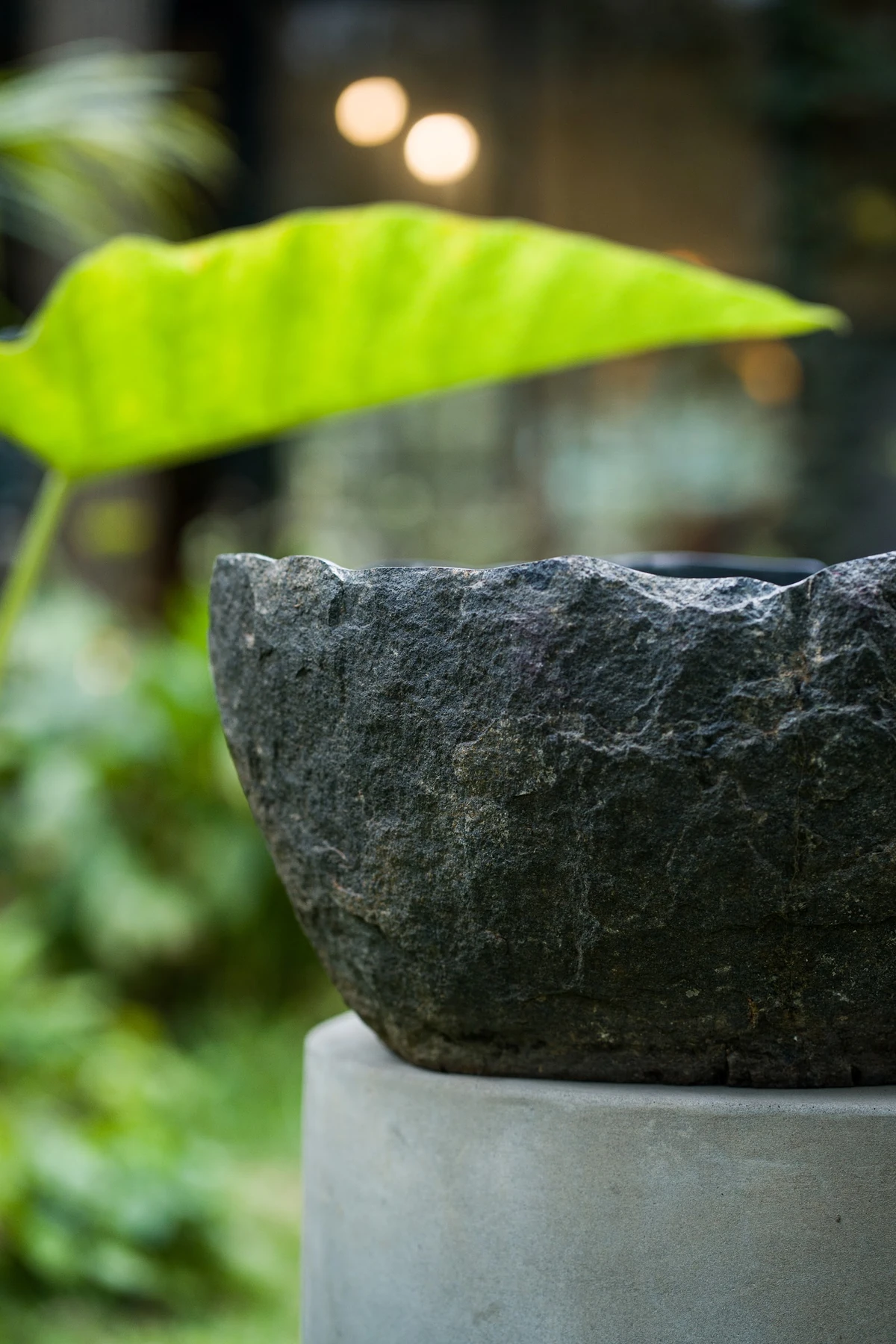
Granite · density and edge
From dark polished planes to the retained skin of a boulder.
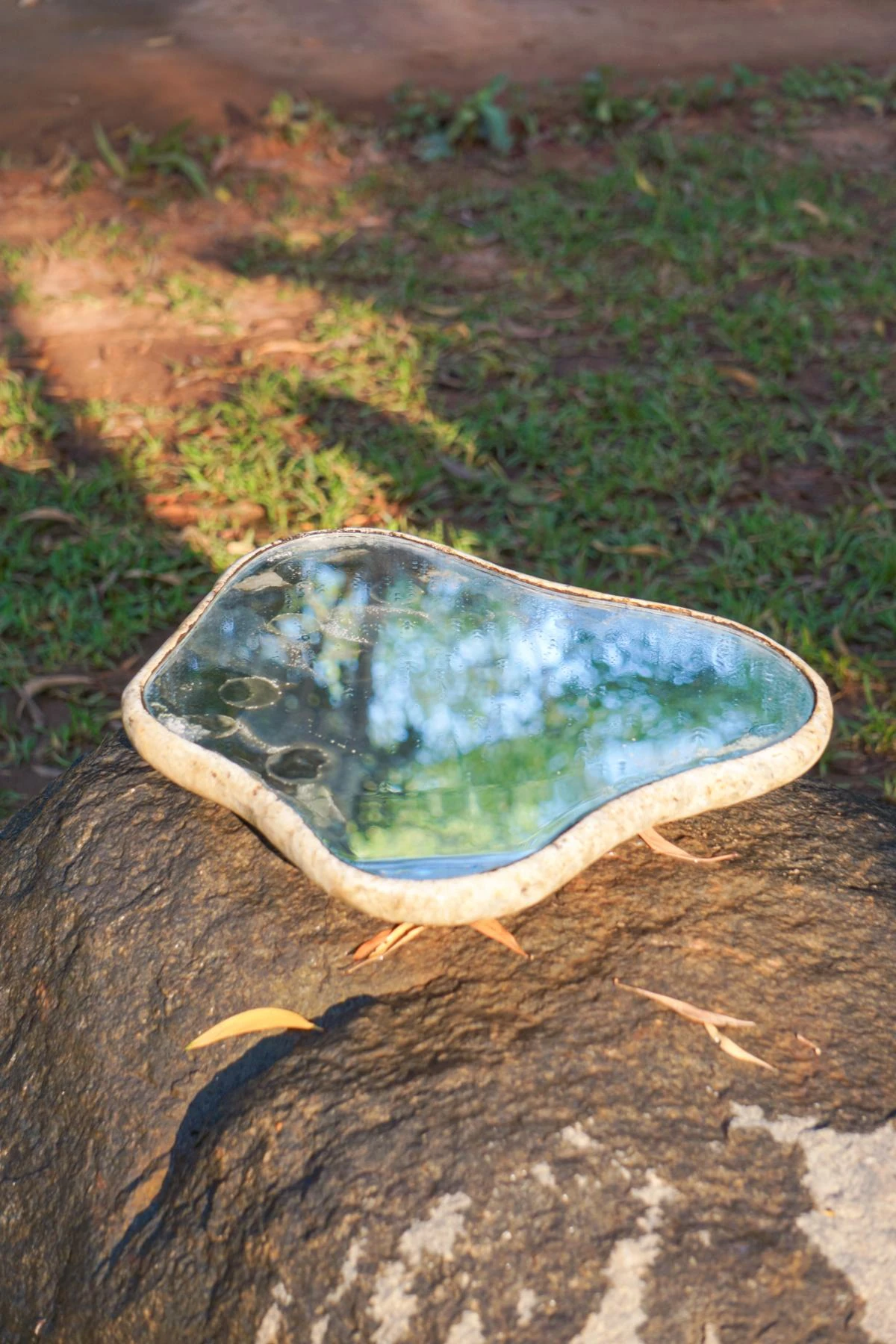
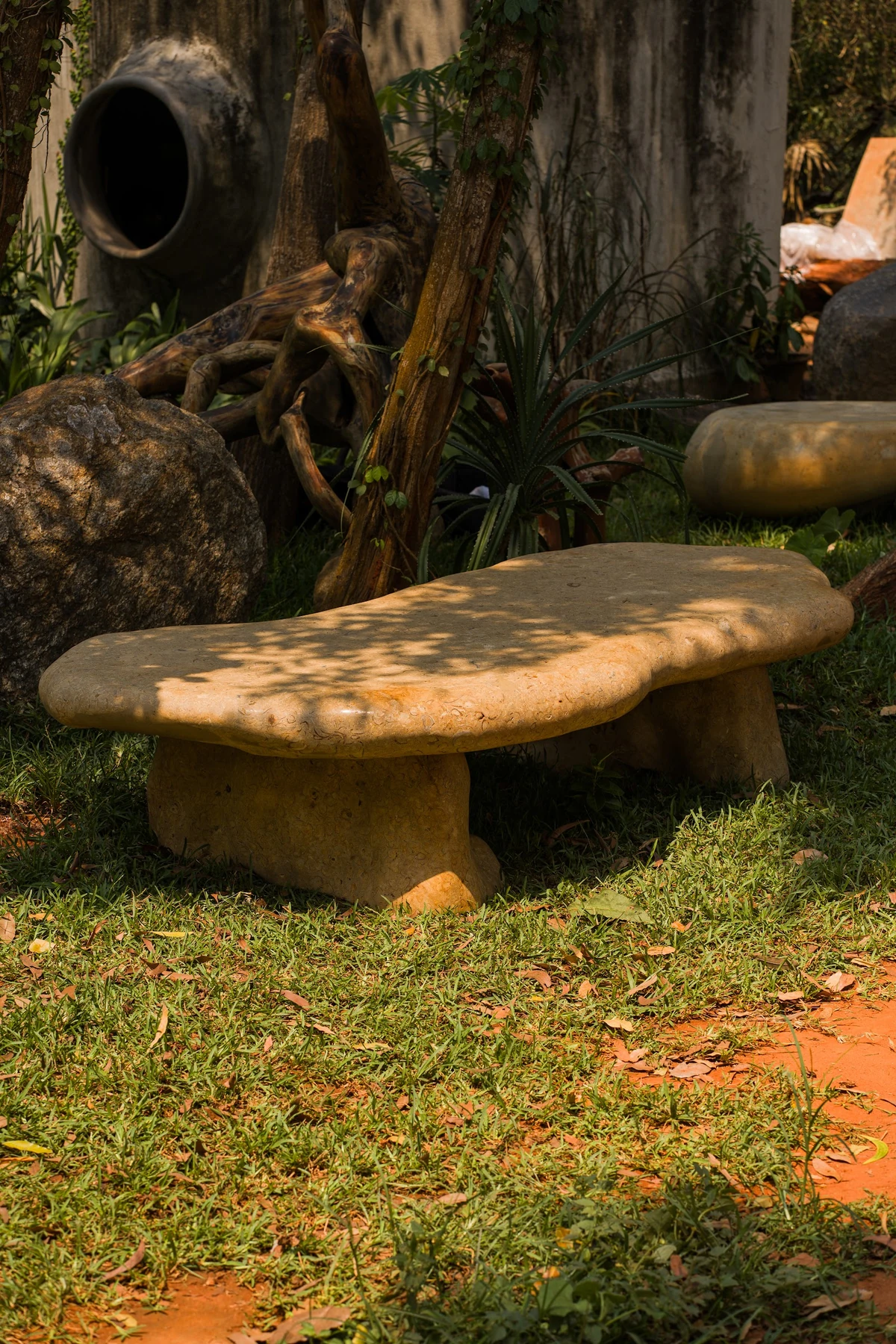
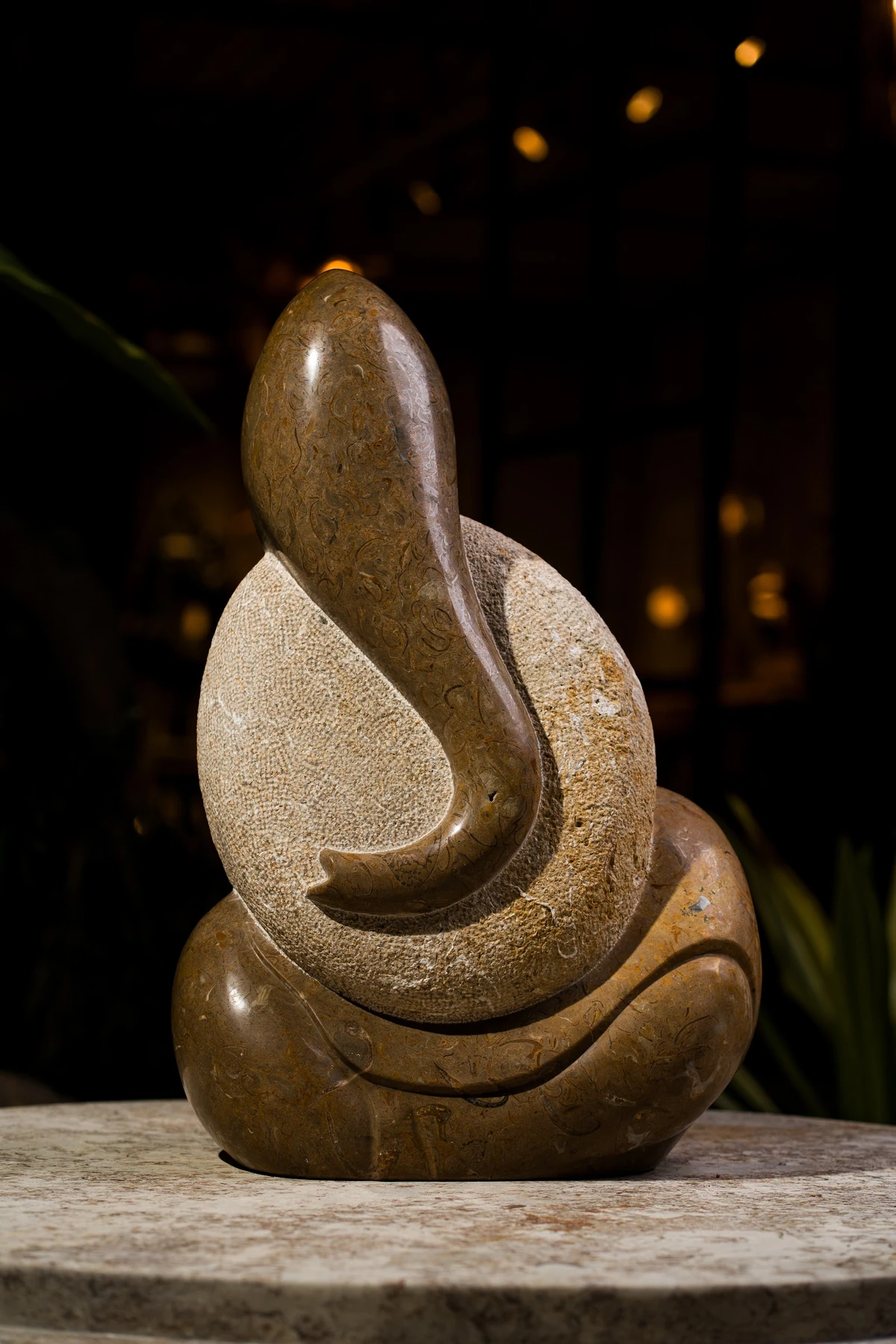
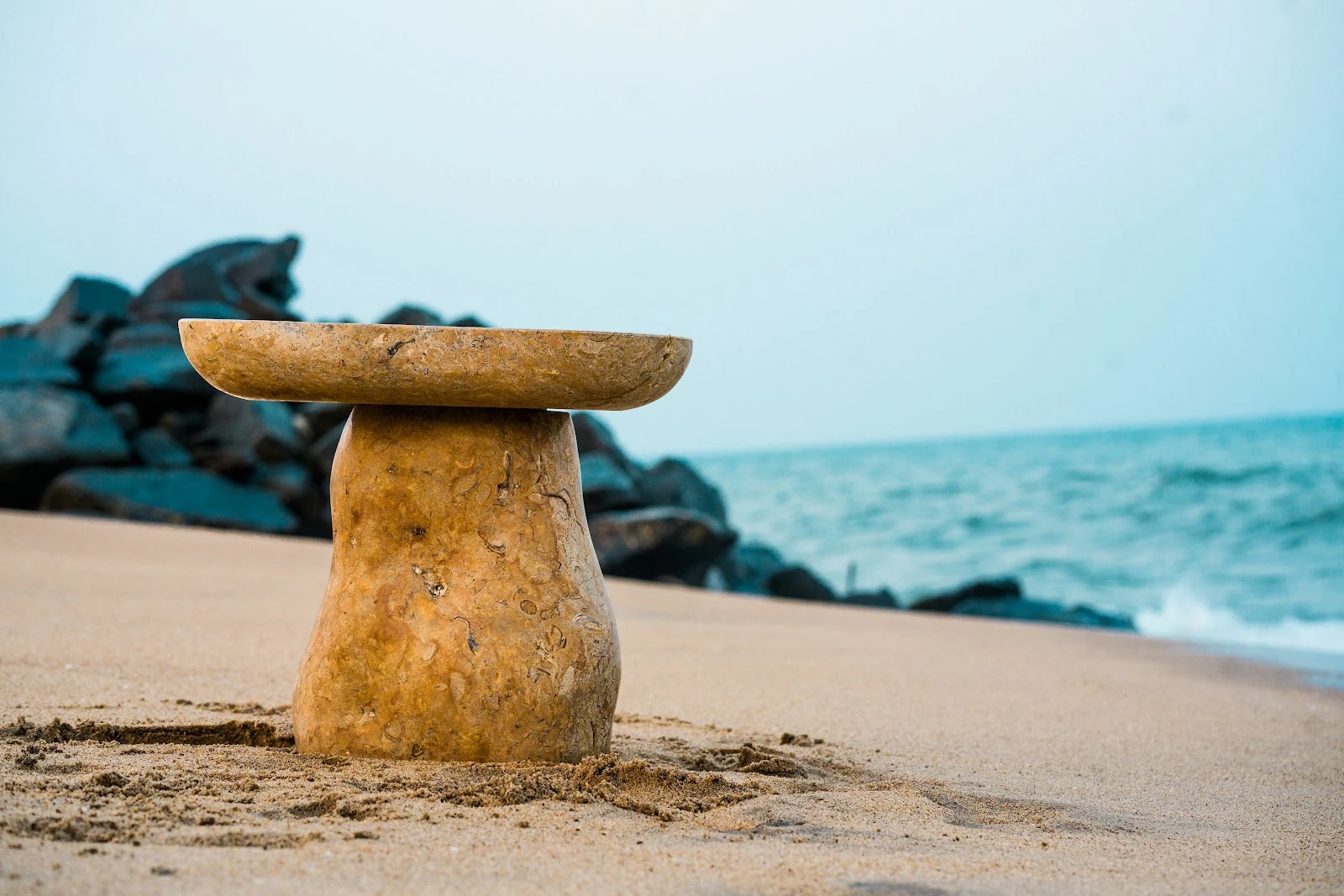
Coquina · visible structure
A porous surface becomes part of the silhouette.
In the completed coquina works, irregular pattern and open texture remain legible at furniture and vessel scale. Refined edges sit beside surfaces that still make the material visually present.
Explore stone vessels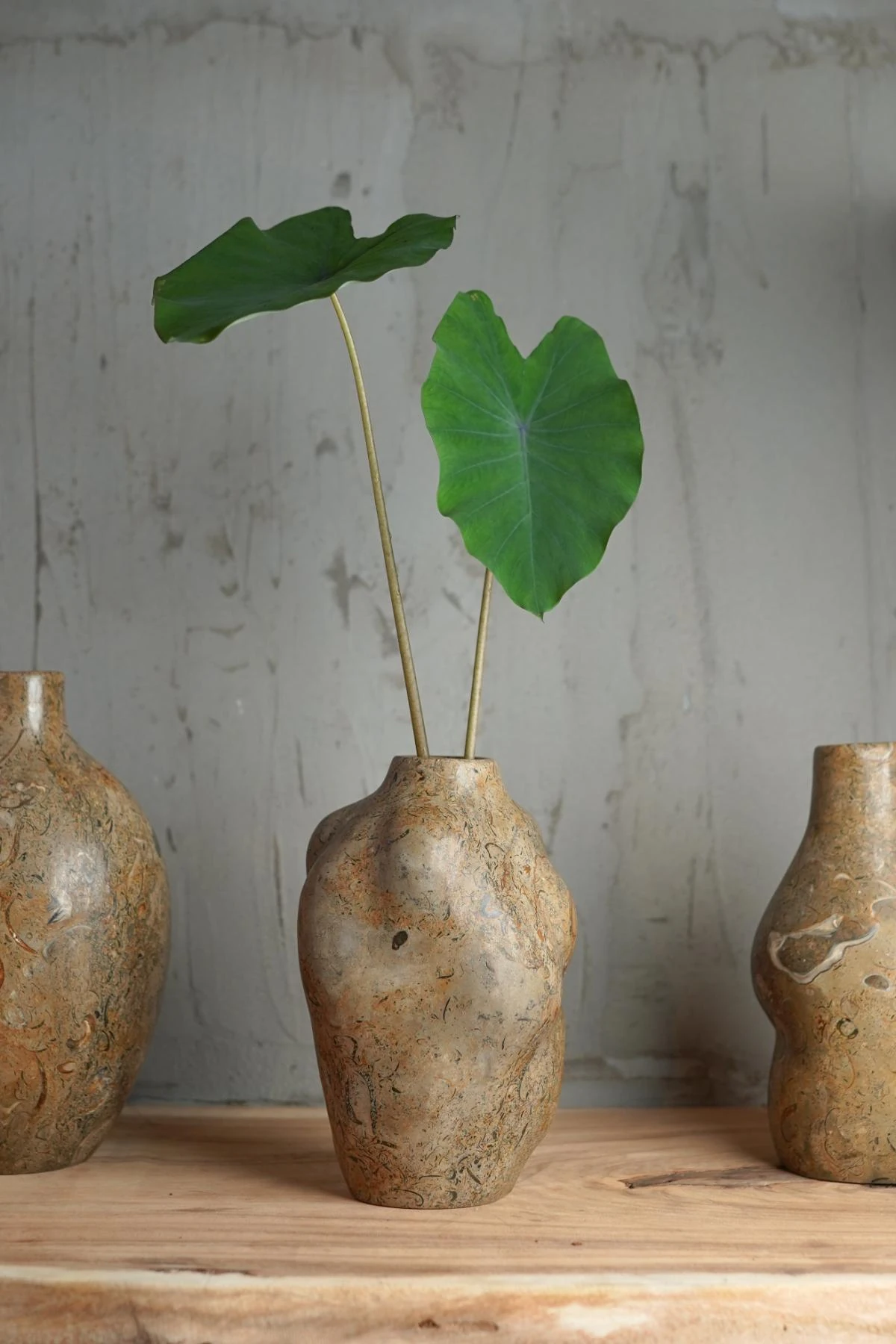
Geological character
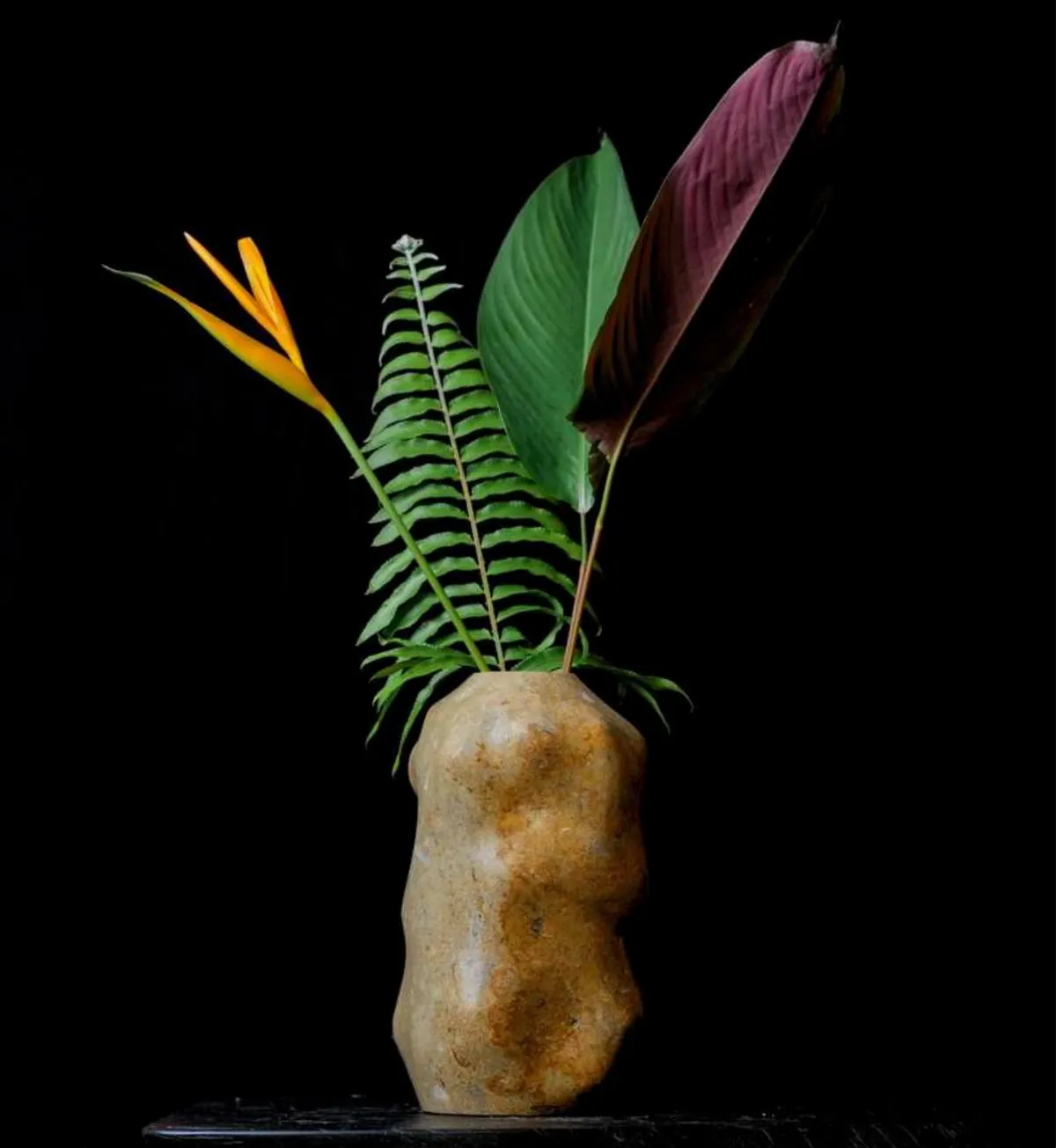
Layer, mineral tone and traces of another life.
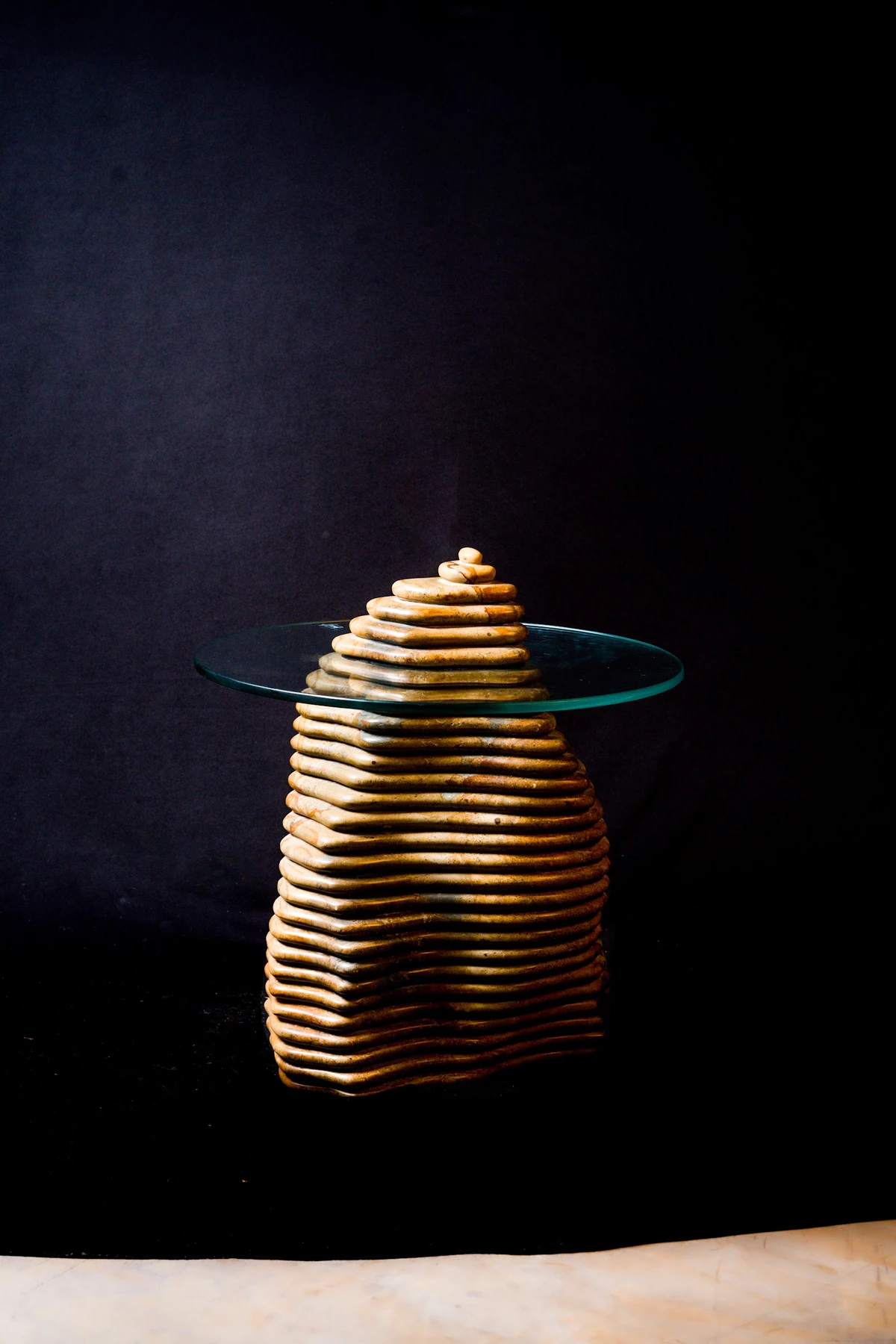
Limestone and glauconite rock extend the palette through distinct textures and tonal fields. Petrified wood belongs here as a mineralised geological material: its grain recalls timber, but it is not treated as wood or as ordinary quarried stone.
Character → making → form
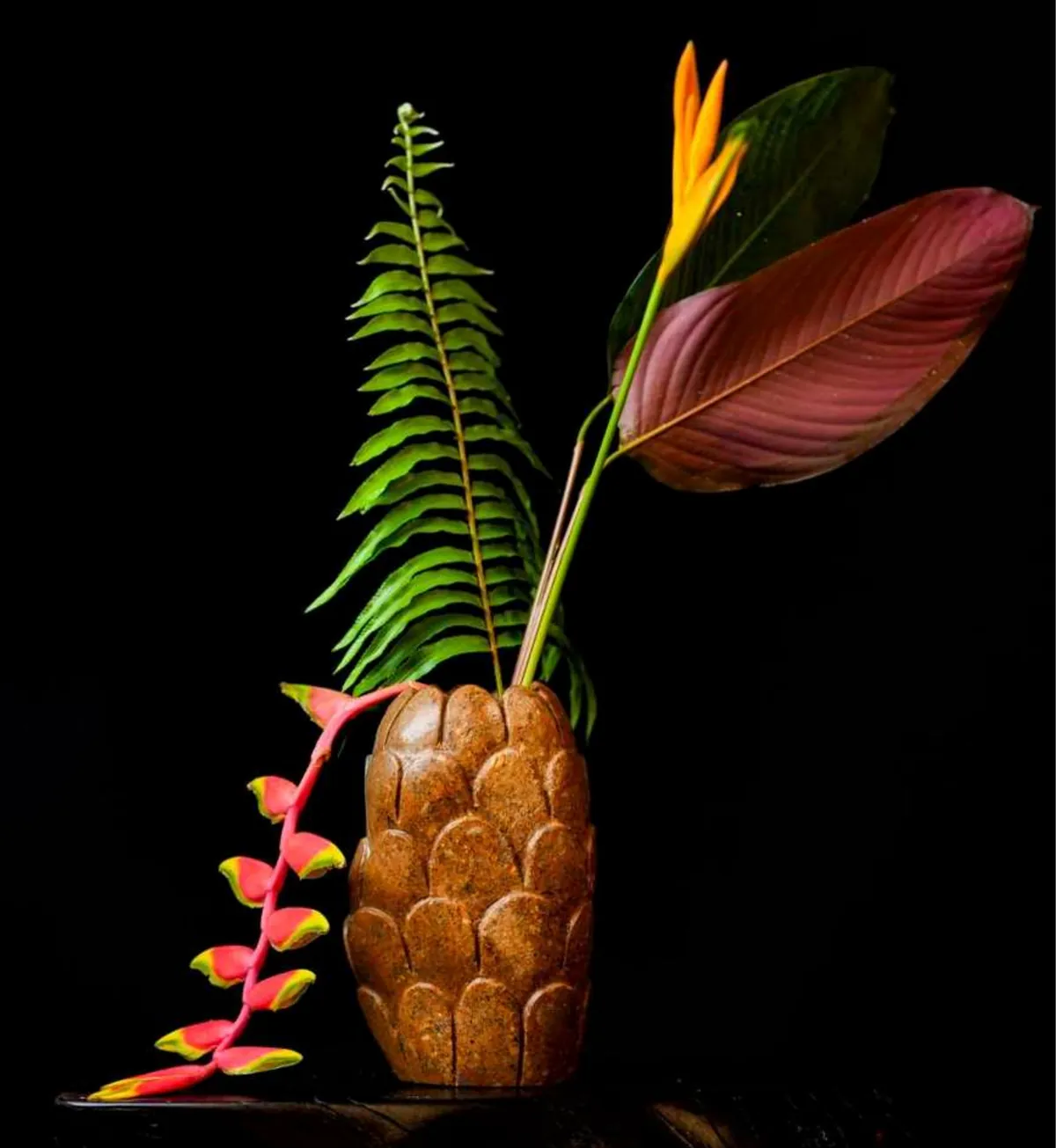
Rough mass and finished surface remain in conversation.
- 01
Read
Consider mass, grain, natural edge, inclusions and structural condition.
- 02
Locate the form
Establish the sculptural or functional direction the particular stone can support.
- 03
Cut, carve and refine
Develop the form through the workshop process, retaining material character where it belongs.
- 04
Finish for context
Resolve touch, use, handling and installation for the work and its destination.
The works shown here reveal the relationship between rough and refined surfaces; they are finished-work records, not documentary photographs of each making stage.
Form → actual work
Stone across the practice.
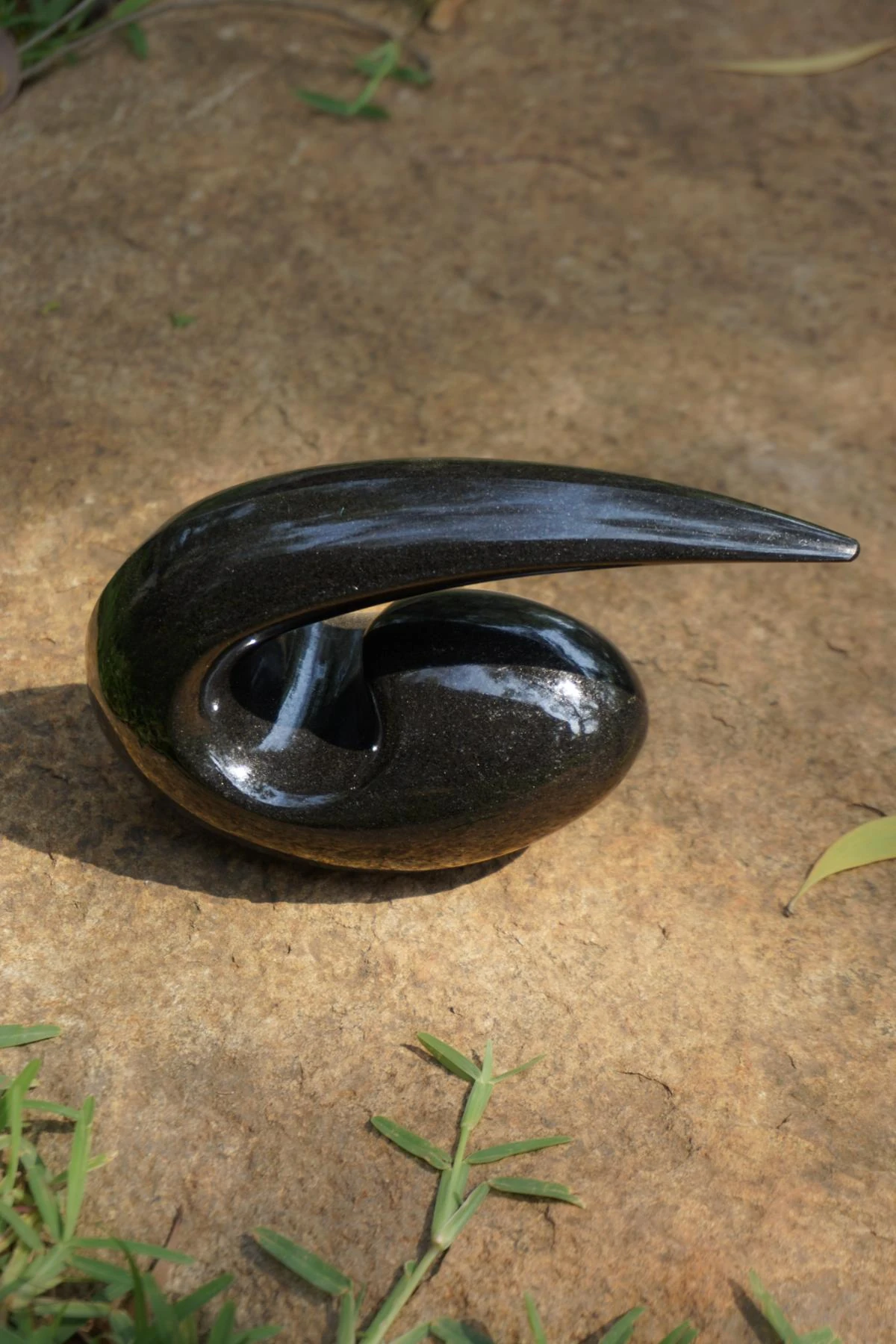
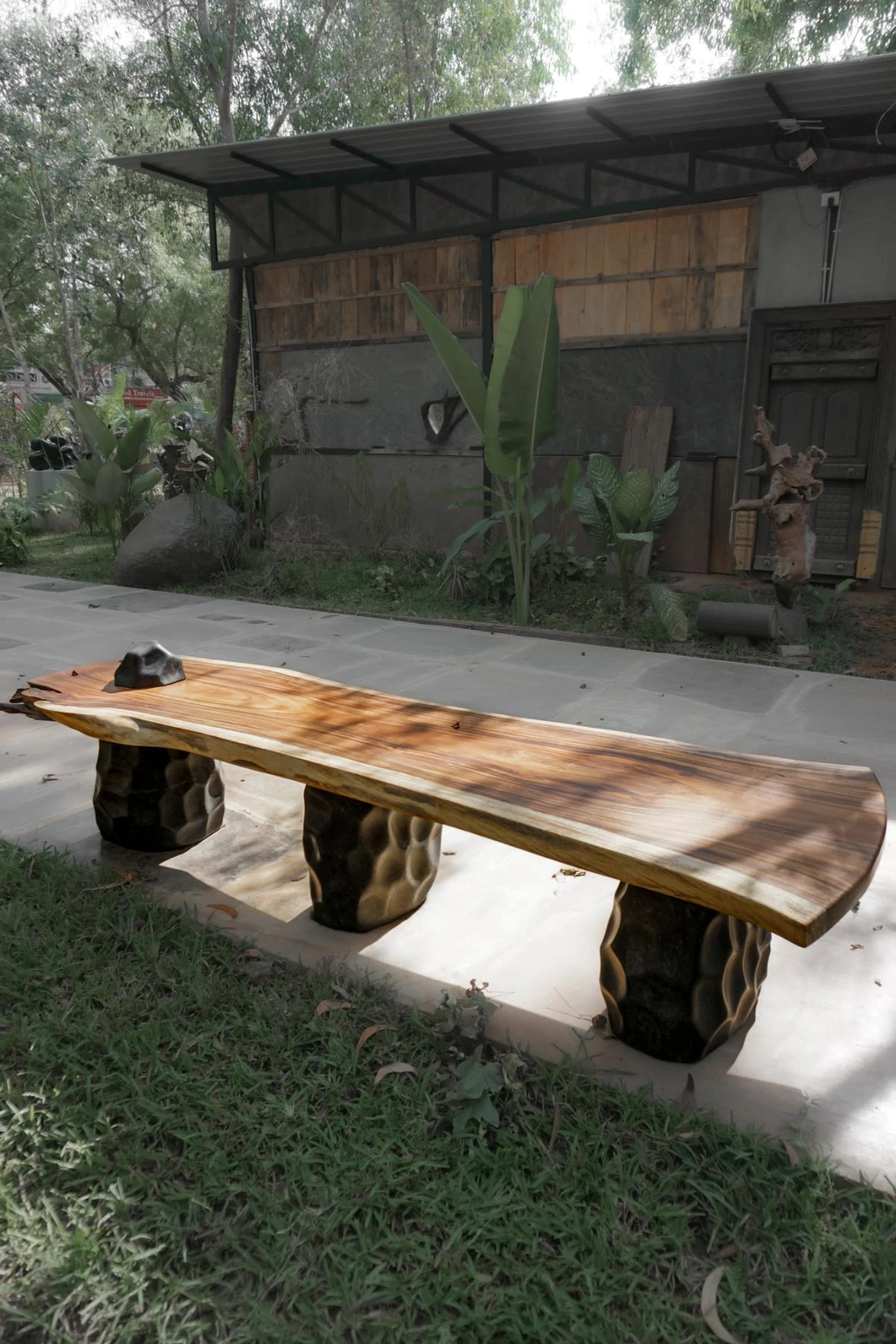
Sixteen catalogue-backed examples across sculpture, furniture, basins, mirrors and vessels. Every material label comes from the corresponding work record.
Sculptural form
Furniture & seating
Basins & water
Objects & vessels
Broader commission possibilities
Evidence stays separate from possibility.
The works above document materials already completed by Web of Life. For a new commission, the conversation may also consider additional granites, marbles, limestones, sandstones, fossil-bearing stones and other suitable Indian natural stone.
These are possible material territories, not claims of completed catalogue work. Suitability depends on the brief, source, availability, scale, structural condition and workshop feasibility.
Stone → commission
Begin with the place, the use or the stone itself.
A completed work can open a conversation around mass, surface, proportion or function. A commissioned piece is then developed for its own material and context rather than reproduced as a template. Desired form, scale, use, architectural setting, surface, available stone dimensions and material character all inform that development.